

You log in and Google is showing a red warning on your own site. Traffic gone, admin locked, spam links everywhere. It happens to thousands of WordPress sites a day, and every owner thought it wouldn’t be them.
A decent WordPress security plugin shuts most of that down: firewall rules, brute-force limits, malware scanning. You don’t need to be a developer, and you don’t need to pay.
Nine plugins below, honestly ranked, with the two that no longer belong on the list called out. Pair whichever you pick with a real WordPress backup plugin, because security without backups is half a plan.
Quick answer
- Best overall Wordfence Security
- Best cloud firewall Sucuri
- Best login hardening Limit Login Attempts Reloaded
- Best free-only setup Wordfence free plus Cloudflare free
Install Wordfence, turn on two-factor authentication, and add Limit Login Attempts Reloaded if you want belt and braces. That combination is free and stops the overwhelming majority of automated attacks. Pay for Sucuri only when you need a cloud firewall in front of the server or a guaranteed cleanup.
Best WordPress security plugins in 2026
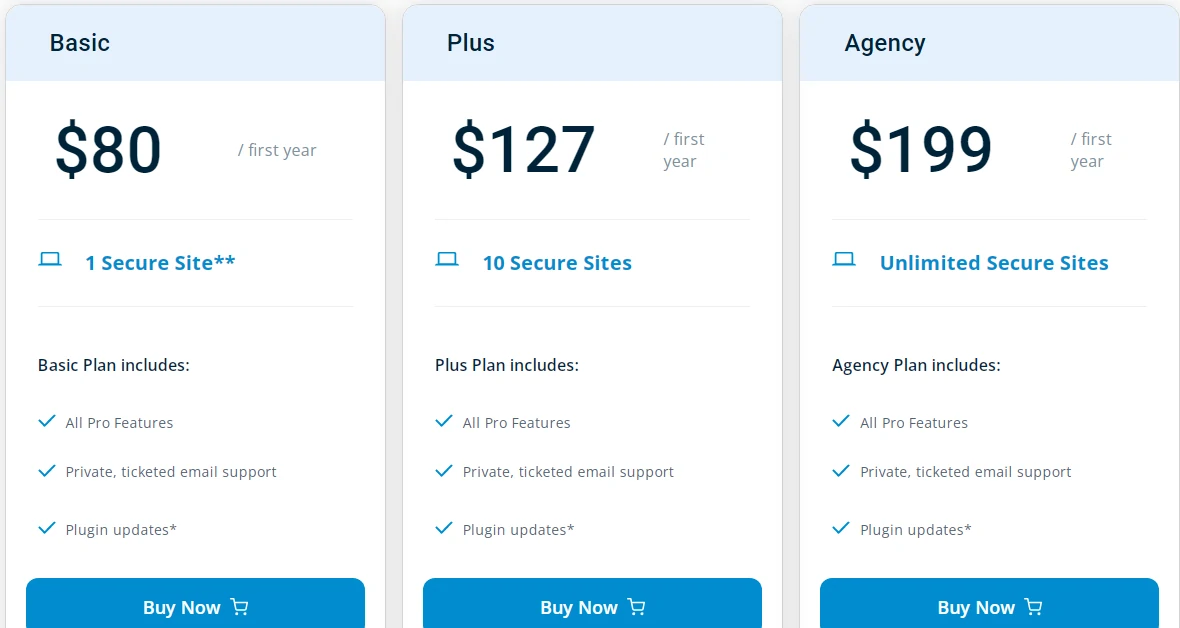
One rule before the list: run one firewall and one scanner, not four. Stacking security plugins is the most reliable way to slow a site down and lock yourself out. Prices were checked in July 2026; some screenshots below show older pricing pages, so trust the numbers in the text.
Wordfence Security, the one to install first
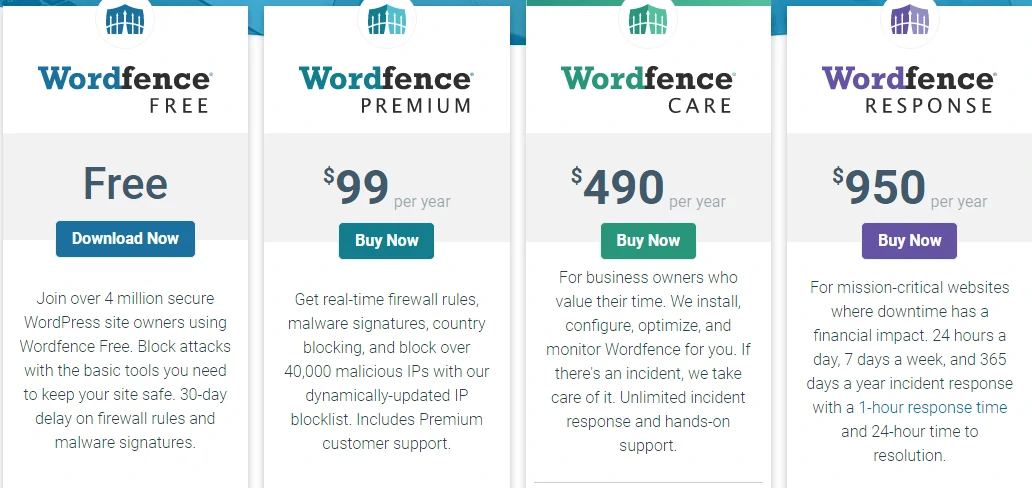
Five million sites, an endpoint firewall that runs before WordPress loads, a malware scanner that compares your core files against the official repository, and built-in two-factor authentication. All free. Nothing else here matches that.
The free tier’s real limitation is timing rather than features: firewall rules and malware signatures reach free users 30 days after Premium customers. For a low-profile blog that delay is survivable. For a store taking payments, it isn’t.
Key features
- Endpoint web application firewall running at the PHP level
- File integrity scanning against the official WordPress repository
- Two-factor authentication and login rate limiting in the free version
- Live traffic view showing exactly what is hitting your site
- Audit log, country blocking and real-time IP blocklist on Premium
Pricing: free forever. Wordfence Premium starts at $149 per year for one site, with Care and Response tiers above that for hands-on incident support. Note that legacy SMS two-factor was retired in July 2026 in favour of app-based codes.
Best for: almost everyone, and especially anyone who wants to see the attacks being blocked.
Not ideal for: shared hosting on a tiny plan, where the scanner’s memory use can be a problem.
Our take: if you install exactly one plugin from this page, make it this one, then spend five minutes enabling 2FA. That step alone defeats credential stuffing.
Sucuri Security, best when you want a cleanup guarantee
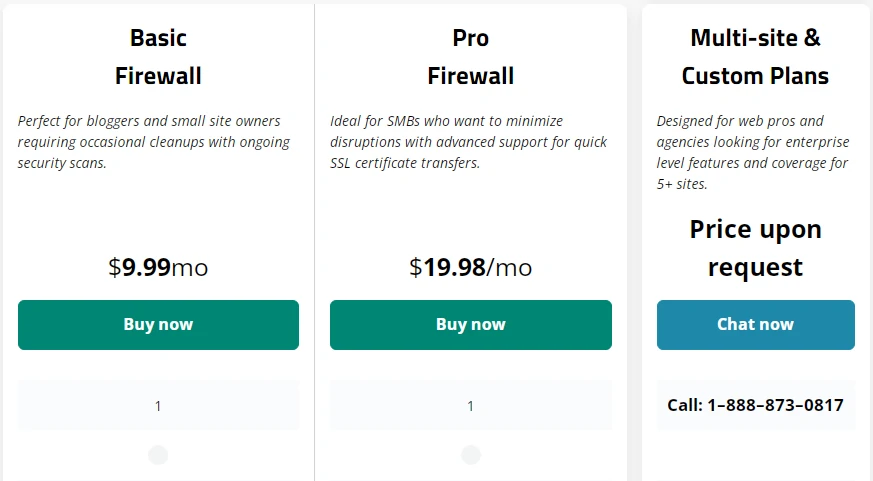
Sucuri splits into two products and the distinction matters. The free plugin, on 600,000 sites, does file integrity monitoring, security activity auditing, blocklist monitoring and post-hack hardening. The money buys the cloud firewall, which filters traffic before it reaches your server at all.
That architecture is the real argument for Sucuri. A plugin-level firewall runs after PHP boots. A cloud WAF blocks the request before your host ever sees it, which also cuts the bandwidth bill on a site under attack.
Key features
- Free file integrity monitoring and security activity audit log
- Cloud WAF with DDoS mitigation and a CDN on paid platform plans
- Malware cleanup included, with response-time SLAs by tier
- Blocklist monitoring across Google, Norton, McAfee and others
Pricing: the plugin is free. The firewall runs $9.99/month Basic or $19.98/month Pro. Full Security Platform plans with guaranteed cleanups start at $229/year and climb to $549/year for Business-tier response times.
Best for: business sites where being hacked costs real money and you want someone contractually obliged to fix it.
Not ideal for: hobby blogs, where the free plugin plus Wordfence does the same job for nothing.
Kadence Security, formerly iThemes and Solid Security
If you’re searching for iThemes Security, this is it. The plugin was rebranded to Solid Security, then rebranded again to Kadence Security after Liquid Web consolidated the range. Same 700,000-install codebase, third name in four years.
The product itself is still strong on identity: passwordless logins, trusted devices, breached-password checking against Have I Been Pwned, and session hijacking protection. Where Wordfence thinks like a firewall, this thinks like an access-control system.
Be aware of the churn. Recent reviews flag support friction and licensing confusion after the rebrand, and the products are increasingly bundled rather than sold standalone. Our longer iThemes Security Pro review covers the feature set in depth.
Key features
- Two-factor authentication, passwordless login and trusted devices
- Breached password protection checked against known leaks
- Session hijacking protection and user security dashboard
- File change detection and site scanner with vulnerability patching
Pricing: free version on the repository. Paid access now arrives through bundled Kadence plans rather than a standalone security licence, so check what you’re actually buying before renewing an old iThemes subscription.
Best for: membership sites and anything with lots of user accounts.
Not ideal for: anyone allergic to vendor churn, because this brand has moved three times.
Limit Login Attempts Reloaded, small plugin, big return

The best value-per-kilobyte plugin in WordPress. It does one thing: lock out an IP after a set number of failed logins, then extend the lockout if they keep trying. Over a million sites run it, and it’s actively maintained.
Crucially it also protects XML-RPC, which is where a lot of brute-force traffic actually goes while everyone watches wp-login.php. It plays nicely alongside Wordfence and Sucuri rather than fighting them.
Key features
- Configurable retry limits and escalating lockout durations
- Safelist and blocklist by IP range or username
- XML-RPC gateway protection
- Documented compatibility with Wordfence and Sucuri
Pricing: free version covers everything a normal site needs. Paid monthly tiers add cloud-based reputation blocking. Support response times on the free plugin have slipped lately, so treat it as fire-and-forget.
Best for: every WordPress site, as a second layer.
Not ideal for: a complete security solution, because that’s not what it claims to be.
SecuPress, the friendliest security audit
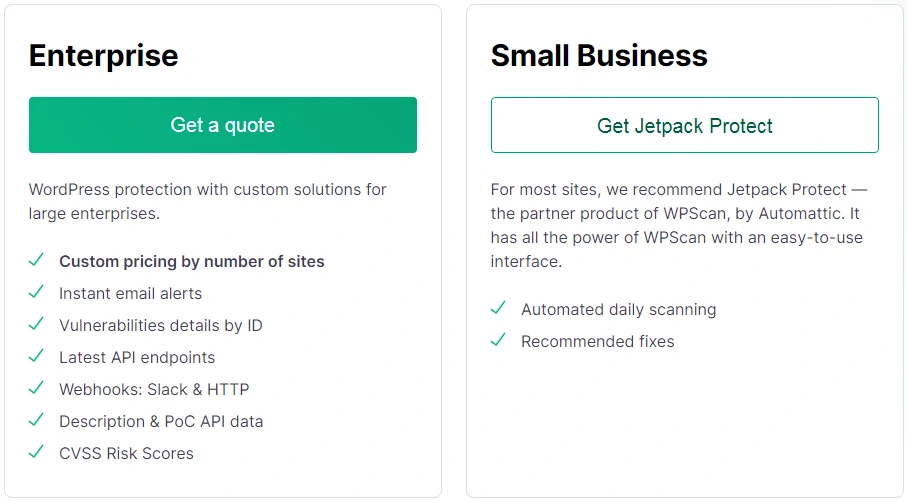
SecuPress runs roughly 35 security checks and hands you a graded report you can export as a PDF. For handing a client evidence that their site was hardened, that report is genuinely useful, and no other plugin here presents findings as clearly.
Honest caveat: it’s a 40,000-install plugin, and the recent review history is mixed. Updates ship weekly, but several long-time users report bugs introduced by those updates and slow support replies. We’d use it as an auditing tool rather than the only thing standing between you and the internet.
Key features
- Around 35 automated security checks with a graded PDF report
- Login page URL change and brute-force blocking
- Detection of modified or vulnerable themes and plugins
- Country-level geoblocking and malware scanning in Pro
Pricing: free version on the repository, with Pro sold on a per-site annual licence. Check the current figure on the vendor site.
Best for: freelancers who need a hardening report to show a client.
Not ideal for: a set-and-forget install, given the recent bug reports.
BulletProof Security, powerful and unfriendly
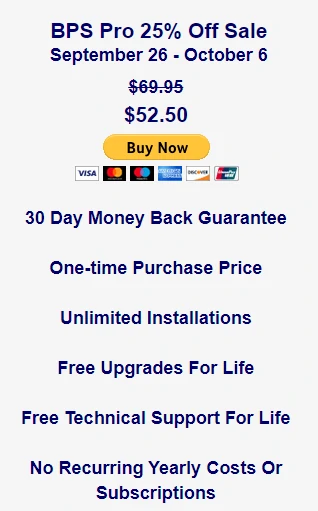
BulletProof works at the .htaccess level, which is both its strength and its problem. Done right, it blocks a lot of junk before PHP runs. Done wrong, it locks you out of your own site and you’re editing files over FTP at midnight.
It’s still maintained and still updated for current WordPress, but the install base has drifted down to around 20,000. The one-click setup wizard has improved a lot. We’d still call it a plugin for people comfortable with server config.
Key features
- htaccess website security firewall with a setup wizard and autofix
- Hidden plugin folders and files via cron
- Login security, monitoring and detailed security logging
- Front-end and back-end maintenance mode
Pricing: free core plugin, with a one-time Pro licence covering unlimited websites. A one-time fee is rare in this category and worth noting.
Best for: developers who want htaccess-level control and one payment.
Not ideal for: beginners. Test it on a WordPress sandbox before it touches production.
Cloudflare, the layer in front of everything
Cloudflare isn’t a WordPress security plugin in the usual sense. It’s a DNS-level proxy, and the official plugin simply connects your site to it, applies WordPress-optimised settings and purges cache correctly. That distinction confuses a lot of roundups.
What you actually get is free universal SSL, always-on DDoS mitigation and the option of a managed WAF. Traffic never reaches your host until Cloudflare has looked at it, which is why we also recommend it alongside good cloud hosting for WordPress. For a site under sustained attack, nothing on this page helps more.
Key features
- Free universal SSL and always-on DDoS protection
- Global CDN that also cuts load times
- Managed WAF rulesets and bot management on paid plans
- One-click WordPress-optimised settings via the official plugin
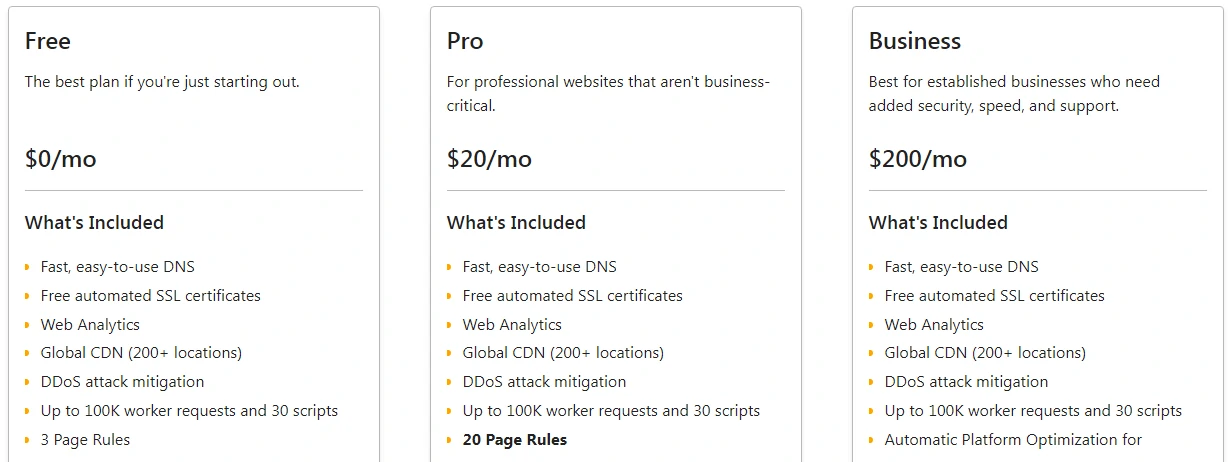
Pricing: Free plan at $0, Pro at $20/month, Business at $200/month. The free plan is not a trial and covers SSL, CDN and basic DDoS protection permanently.
Best for: every site, free tier included, layered under a plugin.
Not ideal for: replacing a malware scanner, because it never looks at your files.
Login hardening: pick one, not both
Two more plugins get recommended constantly, and they overlap heavily with what’s above. Useful, but only in isolation.
Hide login page plugins
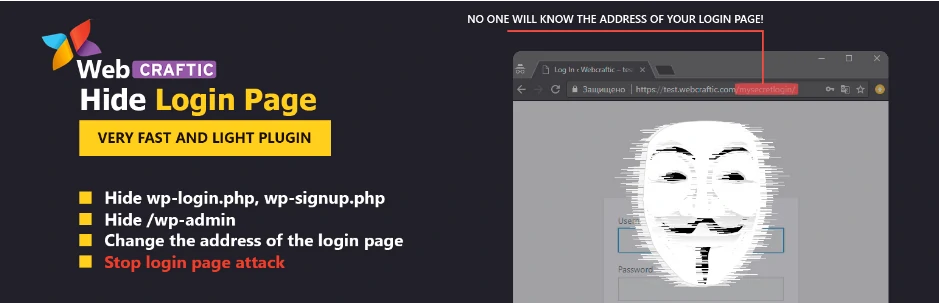
Renaming wp-login.php to something only you know stops most automated bots dead, because they don’t guess URLs, they hit the default. It’s the cheapest win in WordPress security and takes about thirty seconds.
Be clear about what it is though. This is obscurity, not security. It removes noise from your logs and blocks lazy bots. A targeted attacker will find the new URL. Use it on top of rate limiting, never instead of it, and write the new URL down somewhere before you log out.
WP Limit Login Attempts
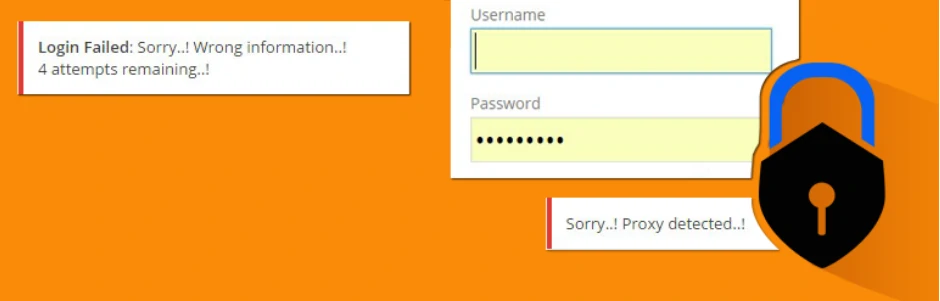
A lighter alternative that adds captcha verification to the login form and redirects odd requests to the homepage, which confuses a lot of hacking tools. It’s GDPR-conscious and genuinely tiny.
Our honest read: it does roughly what Limit Login Attempts Reloaded does with a smaller user base behind it. Install one or the other. Installing both gives you two lockout counters arguing about the same IP.
What changed since we first published this list
WPScan is no longer the recommendation
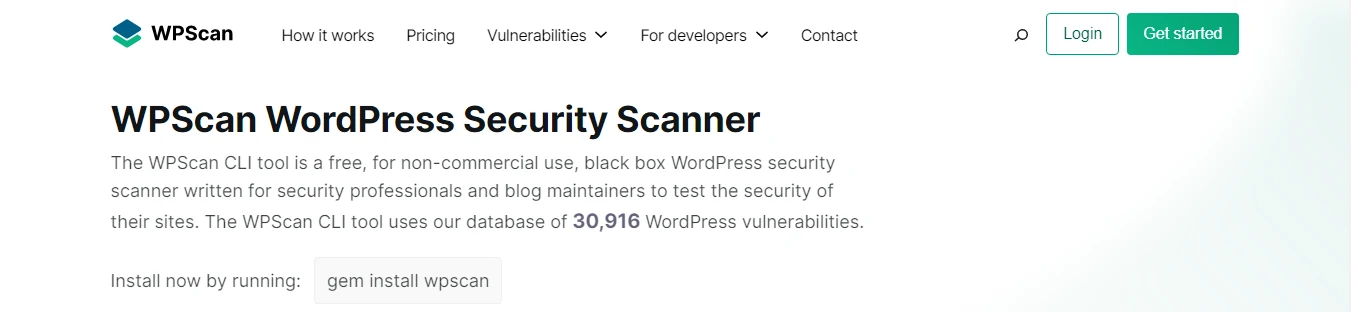
The WPScan plugin used to be an easy recommendation: a hand-curated vulnerability database, sponsored by Automattic, checking your core, plugins and themes against thousands of known flaws.
That changed. WPScan’s own listing now states the plugin is no longer actively supported for non-enterprise users and points them to Jetpack Protect instead, which uses the same database. Its last update was six months ago and it hasn’t been tested against the newest WordPress release.
Our advice: if you specifically want WPScan’s vulnerability data, install Jetpack Protect. If you already run Wordfence, you have equivalent scanning and don’t need either.
iThemes Security has been renamed twice
iThemes became SolidWP, Solid Security became Kadence Security, and the whole range now sits under Liquid Web with bundled pricing. If you’re renewing an old licence, check what product you’re actually buying and whether the standalone plan you remember still exists.
How the main options compare
| Feature |
Best OverallWordfenceFree / $149 per yearBest for: Most sites |
SucuriFree / $9.99 per monthBest for: Business sites |
Kadence SecurityFree / bundled plansBest for: Membership sites |
SecuPressFree / per-site ProBest for: Client audits |
|---|---|---|---|---|
| Active installs | 5,000,000+(winner for this row) | 600,000+ | 700,000+ | 40,000+ |
| Firewall in free version | Yes(winner for this row) | No | No | No |
| Malware scanner free | Yes | Yes | Yes | No |
| Two-factor authentication free | Yes | Yes | Yes | No |
| Cloud WAF available | No | Yes(winner for this row) | No | No |
| Malware cleanup included | No | Yes(winner for this row) | No | No |
| Beginner friendliness |
We may earn a commission when you buy through links on this page. This does not affect our reviews.
Wordfence gives the most away. Sucuri is the only one that will clean the mess up for you. Kadence Security wins on user management. SecuPress wins on reporting and loses on install base.
Mistakes that get WordPress sites hacked
- Running abandoned plugins. The overwhelming majority of hacked WordPress sites are compromised through a known flaw in an outdated plugin, not through the login form. Check the last-updated date on everything you install, including your SEO plugin.
- Stacking three security plugins. Overlapping firewalls conflict, duplicate scans hammer your CPU, and you end up disabling all of them out of frustration.
- Skipping two-factor authentication. It’s free in Wordfence, Sucuri and Kadence Security, takes five minutes, and defeats every stolen-password attack.
- Trusting the host to handle it. Managed hosts secure the server. Your plugins, themes and passwords are still yours. Even good WordPress hosting can’t patch a vulnerable plugin you chose to install.
- Having no offsite backup. Every plan above assumes you can roll back. If your only backup lives on the same server that got compromised, you don’t have a backup.
How we evaluated these
We checked each plugin’s repository listing for last update, tested-up-to WordPress version, install count and support responsiveness, then read the vendor pricing pages directly rather than repeating figures from other roundups. Anything unsupported or abandoned was demoted with an explanation instead of being quietly dropped, because recommending a stale security plugin is worse than recommending none.
DroidCrunch runs Wordfence and Cloudflare on live sites, and has deployed Limit Login Attempts Reloaded and the iThemes lineage on client builds. Sucuri’s paid platform, SecuPress Pro and BulletProof Pro are assessed on documentation, pricing and public track record rather than long-term hands-on use. Prices verified July 2026. Some screenshots date from earlier pricing pages.
Frequently asked questions
Do I really need a WordPress security plugin?
If your site is public, yes. Automated bots probe WordPress logins and known plugin flaws around the clock, and core WordPress ships without a firewall, login limiting or malware scanning. A free plugin closes all three gaps in about ten minutes.
Is the free version of Wordfence good enough?
For most sites, yes. You get the firewall, the malware scanner, login rate limiting and two-factor authentication at no cost. The difference is timing: free users receive new firewall rules and malware signatures 30 days after Premium subscribers.
Do security plugins slow down a WordPress site?
Barely, when you run one. Most of the work happens on login and admin requests rather than on every page view. Slowdowns almost always come from running two overlapping firewall or scanner plugins at the same time.
What happened to iThemes Security?
It was renamed Solid Security, then renamed again to Kadence Security under Liquid Web. The plugin and its 700,000 installs are the same. What changed is licensing, which now arrives through bundled plans rather than a standalone security subscription.
Should I still install the WPScan plugin?
No. WPScan now states the plugin is not actively supported for non-enterprise users and recommends Jetpack Protect instead, which uses the same vulnerability database. If you already run Wordfence you have equivalent scanning and need neither.
Does hiding my login URL actually protect the site?
It stops automated bots that only target the default wp-login.php address, which removes a lot of noise. It is obscurity rather than security though, so pair it with login rate limiting and two-factor authentication instead of relying on it alone.
My host says it handles security. Do I still need a plugin?
Yes. Hosts secure the server, the network and the PHP stack. Weak passwords, outdated plugins and vulnerable themes sit in your application layer and remain your responsibility, which is exactly the layer a security plugin defends.
Our pick for 2026
Install Wordfence, enable two-factor authentication, add Limit Login Attempts Reloaded, and put the free Cloudflare plan in front of the whole thing. That stack costs nothing and stops the automated attacks that make up almost all of the threat.
Pay for Sucuri when downtime costs you money, because the cloud firewall and the guaranteed cleanup are worth real cash on a store. Choose Kadence Security if you run a membership site where user accounts are the attack surface. Skip WPScan entirely now.
One warning that matters more than any plugin choice: the best WordPress security plugins won’t save a site running a plugin nobody has updated since 2023. Audit what’s installed, delete what you don’t use, and treat abandoned code as a live vulnerability.
Next step: open your plugins screen, sort by last update, and remove anything untouched for over a year. Then take an offsite backup before you change a single security setting.