

Choosing the right web development approach can make or break your project timeline and budget. In 2026, the debate between Webflow and traditional HTML/CSS coding has become more relevant than ever, especially as businesses demand faster turnaround times without sacrificing quality.
I’ve spent the last three years building websites using both methods, and the difference in workflow efficiency is staggering. According to recent industry data, visual development platforms like Webflow can reduce development time by up to 60% compared to hand-coding, while the global no-code/low-code market is projected to reach $187 billion by 2030. Yet, traditional coding still holds significant advantages in terms of flexibility and control.
Webflow has transformed how designers and developers approach web projects by offering a visual canvas that generates clean, production-ready code. Meanwhile, traditional HTML/CSS remains the foundation of web development, giving developers complete control over every pixel and line of code. But which approach delivers better results for your specific needs?
The statistics reveal an interesting trend: 67% of professional developers now use visual development tools alongside traditional coding, suggesting that the future isn’t about choosing one over the other but understanding when to use each approach. Throughout my experience, I’ve discovered that the right choice depends on your project requirements, timeline, team skills, and long-term maintenance plans.
In this detailed comparison, I’ll share my hands-on experience with both approaches, compare their core features, break down the actual costs, and help you determine which method aligns with your web development goals in 2026.
Webflow vs. Traditional HTML/CSS Overview
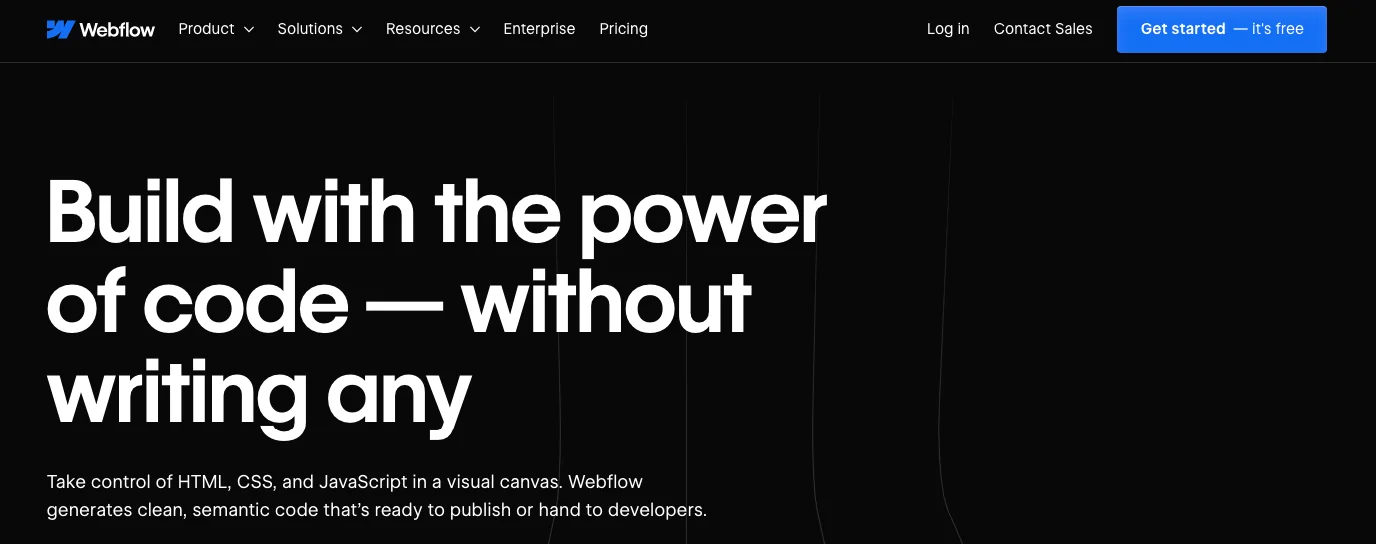
Webflow launched in 2013 as a revolutionary visual web design platform founded by Vlad Magdalin, Sergie Magdalin, and Bryant Chou. What started as a solution to bridge the gap between design and development has grown into a comprehensive platform serving over 3.5 million users worldwide. The San Francisco-based company now employs more than 800 people and has raised over $330 million in funding, with a valuation exceeding $4 billion.
Traditional HTML/CSS, on the other hand, represents the foundational coding approach that has powered the web since the early 1990s. HTML (HyperText Markup Language) was created by Tim Berners-Lee in 1991, while CSS (Cascading Style Sheets) was introduced by Håkon Wium Lie in 1996. These technologies remain the backbone of every website on the internet, regardless of how they’re created.
Webflow’s mission centers on democratizing web development by enabling designers to build professional websites without writing code, while maintaining the quality and performance of hand-coded sites. The platform automatically generates clean, semantic HTML, CSS, and JavaScript, making it a bridge between visual design and traditional development.
| Aspect | Webflow | Traditional HTML/CSS |
|---|---|---|
| Official Website | webflow.com | w3.org (standards), developer.mozilla.org (resources) |
| Developers | Webflow Inc. (Vlad Magdalin, Sergie Magdalin, Bryant Chou) | W3C (World Wide Web Consortium) |
| Year Launched | 2013 | HTML: 1991, CSS: 1996 |
| USPs | Visual development, hosting included, CMS, no-code approach | Complete control, unlimited flexibility, no platform lock-in |
| Category | Visual Web Design Platform, No-Code Tool | Programming Languages, Web Standards |
| Integrations | 1000+ (Zapier, Google Analytics, Mailchimp, Memberstack) | Unlimited (any library, framework, or service) |
| Best For | Designers, marketing teams, agencies, startups | Developers, complex applications, custom functionality |
| Support Options | Email, community forum, Webflow University, workshops | Stack Overflow, MDN docs, dev communities, courses |
| Documentation | Webflow University (video tutorials, articles) | MDN Web Docs, W3C specifications, countless resources |
| Company Headquarter | San Francisco, California, USA | N/A (open standards) |
| Starting Price | $14/month (Basic site plan) | Free (only hosting/domain costs) |
| Number of Employees | 800+ | N/A |
| Alternatives (Webflow) | Wix, Squarespace, WordPress + Elementor, Framer | React, Vue.js, Angular, Bootstrap, Tailwind CSS |
| Alternatives (Traditional) | VS Code, Sublime Text, CodePen (editors/tools) | Webflow, Bubble, Wix, Squarespace |
| Affiliate Program | Yes | N/A |
| Affiliate Commission | Up to $500 per referral for annual plans | N/A |
| Money Back Guarantee | 14-day refund on annual plans | N/A |
| Hosting Included | Yes (AWS infrastructure) | No (separate hosting required) |
| Code Export | Yes (with paid plans) | N/A (you own the code) |
Webflow vs. Traditional HTML/CSS Features
1. Visual Design Interface vs. Code Editor 🎨
Webflow provides a drag-and-drop visual canvas where I can design websites exactly as they’ll appear in browsers. The interface resembles design tools like Figma or Sketch but generates production-ready code in real-time. Every element I place, every style I adjust, immediately translates into clean HTML and CSS.
When I used Webflow for a client’s e-commerce site, I completed the entire design in the visual editor without touching a single line of code. The style panel gave me access to CSS properties through intuitive controls—spacing, typography, colors, and layouts all visible and adjustable with sliders and input fields.
Traditional HTML/CSS requires working directly in a code editor like VS Code or Sublime Text. I write markup structures in HTML and styling rules in CSS files, then preview changes in a browser. While this demands more technical knowledge, it gives me complete control over every aspect of the code structure and output.
My experience: For rapid prototyping and design-focused projects, Webflow’s visual interface accelerated my workflow dramatically. However, when building a custom web application with complex interactions, traditional coding gave me the precision I needed.
2. Responsive Design Capabilities 📱
Both approaches handle responsive design, but the implementation differs significantly. In Webflow, I switch between breakpoints (desktop, tablet, mobile landscape, mobile portrait) using a visual breakpoint selector. Any style changes I make apply to that specific breakpoint and cascade down to smaller screens unless overridden.
I recently built a portfolio site in Webflow where adjusting the three-column desktop layout to a single-column mobile layout took minutes. The visual interface showed exactly how elements stacked, and I could fine-tune spacing for each screen size without writing media queries.
With traditional HTML/CSS, I write media queries manually in my stylesheets to define responsive behavior. This approach requires understanding CSS breakpoints, flexbox, grid systems, and how to structure mobile-first or desktop-first code.
/* Traditional responsive approach */
.container {
  display: grid;
  grid-template-columns: repeat(3, 1fr);
  gap: 20px;
}

@media (max-width: 768px) {
  .container {
    grid-template-columns: 1fr;
  }
}
My experience: Webflow’s visual responsive controls made client revisions incredibly fast—they could see changes immediately across devices. Traditional coding gave me more granular control over responsive behavior, especially for complex layouts.
3. CMS and Dynamic Content 📊
Webflow includes a built-in CMS (Content Management System) that lets me create custom content types called Collections. When I built a blog for a marketing agency, I defined a “Blog Posts” collection with fields for title, author, featured image, content, and categories. The CMS generated collection pages and dynamic lists automatically.
The visual approach meant I could design how blog posts appeared, then bind those designs to CMS fields. Changes to the design updated all posts instantly, and editors could add content through an intuitive interface without touching the design.
Traditional HTML/CSS has no built-in CMS. For dynamic content, I need to integrate third-party solutions like WordPress, integrate headless CMS platforms (Contentful, Strapi), or build custom backend systems with databases. This requires additional development skills in backend languages like PHP, Node.js, or Python.
My experience: For content-heavy sites where non-technical clients need to update information regularly, Webflow’s CMS proved invaluable. When I needed advanced content relationships and custom backend logic, traditional development with a headless CMS offered more flexibility.
4. Interactions and Animations ✨
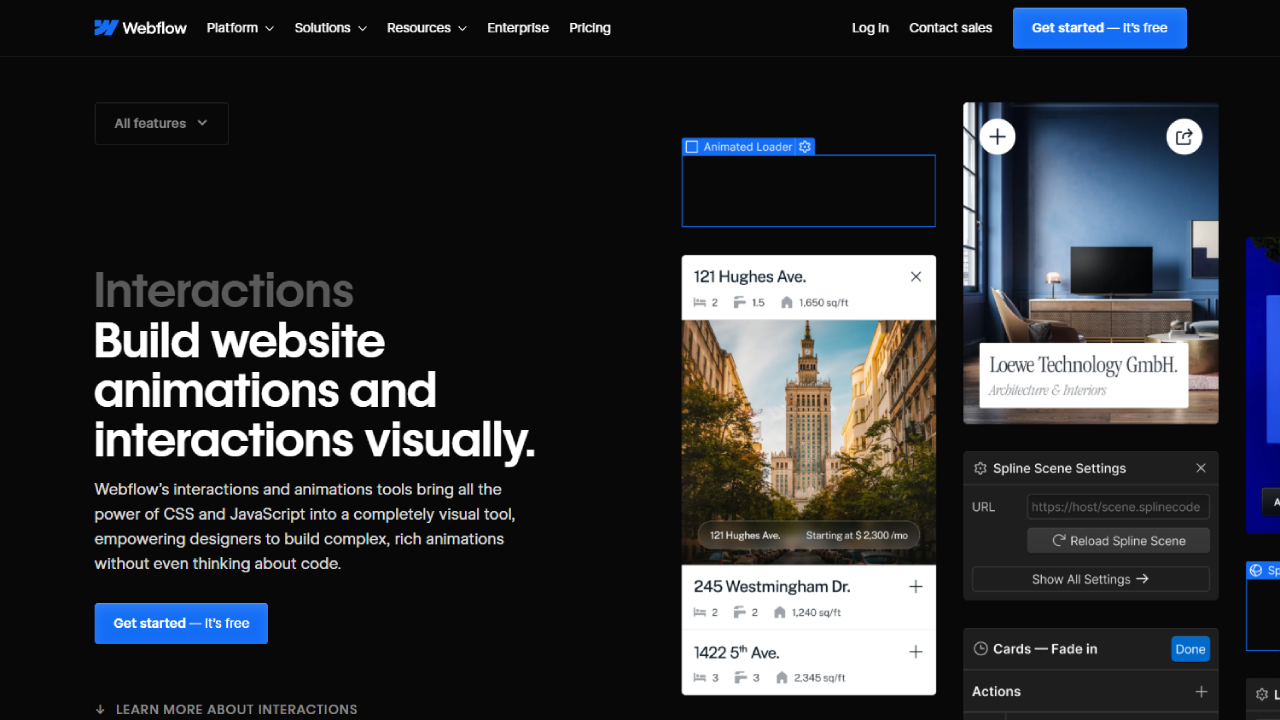
Webflow’s Interactions feature is where the platform truly shines for animation work. I can create scroll-based animations, hover effects, page load animations, and complex interactions without writing JavaScript. The timeline-based editor resembles After Effects, letting me orchestrate multiple animations with precise timing.
For a product launch page, I created parallax scrolling effects, staggered text reveals, and image fade-ins entirely within Webflow’s interface. The animations were smooth, performant, and worked across all browsers without additional testing.
Traditional HTML/CSS handles animations through CSS transitions, transforms, and animations, plus JavaScript for more complex interactions. While CSS animations handle simpler effects beautifully, complex interactions require JavaScript libraries like GSAP, AOS, or writing custom scripts.
/* Traditional CSS animation */
@keyframes fadeIn {
  from { opacity: 0; transform: translateY(20px); }
  to { opacity: 1; transform: translateY(0); }
}

.element {
  animation: fadeIn 0.6s ease-out;
}
My experience: Webflow’s interaction builder saved me hours on animation-heavy projects. However, when I needed highly custom interactions tied to specific user behaviors or API responses, traditional JavaScript development offered more possibilities.
5. Code Quality and Export 💻
Webflow generates semantic, W3C-compliant HTML and organized CSS automatically. The code structure follows best practices, with class-based styling and logical element hierarchy. I can export the code from any Webflow project (with paid plans), receiving a clean folder structure with HTML files, CSS, JavaScript, and assets.
When I exported a Webflow site to host elsewhere, the code was impressively clean—minified for production, properly structured, and well-commented. The CSS used a systematic class naming convention that made sense even months later.
Traditional HTML/CSS code quality depends entirely on the developer’s skills and practices. I maintain complete control over naming conventions, file organization, and code structure. This flexibility means I can follow any methodology (BEM, SMACSS, OOCSS) or adapt to team standards.
My experience: Webflow’s generated code exceeded expectations for automated output, though I occasionally needed to adjust class names for team conventions. Traditional coding gave me the satisfaction of crafting exactly the structure I wanted.
6. Hosting and Deployment 🚀

Webflow includes hosting on AWS infrastructure with every site plan. Deployment is a single click—I publish changes, and they go live within seconds. The platform handles SSL certificates, CDN distribution, automatic backups, and server maintenance. I never worry about server configuration or performance optimization.
For a client’s e-commerce site, Webflow’s hosting handled traffic spikes during product launches without any intervention. The built-in CDN ensured fast load times globally, and automatic SSL gave the site instant credibility.
Traditional HTML/CSS requires separate hosting arrangements. I must choose hosting providers (Netlify, Vercel, AWS, traditional shared hosting), configure deployment pipelines, manage SSL certificates, and handle server maintenance. While this adds complexity, it also offers unlimited hosting options and often lower costs.
My experience: Webflow’s integrated hosting simplified project delivery—one less vendor relationship for clients. However, when I needed specific server configurations or wanted to minimize ongoing costs for simple sites, traditional hosting with platforms like Netlify offered more flexibility.
7. E-commerce Capabilities 🛒
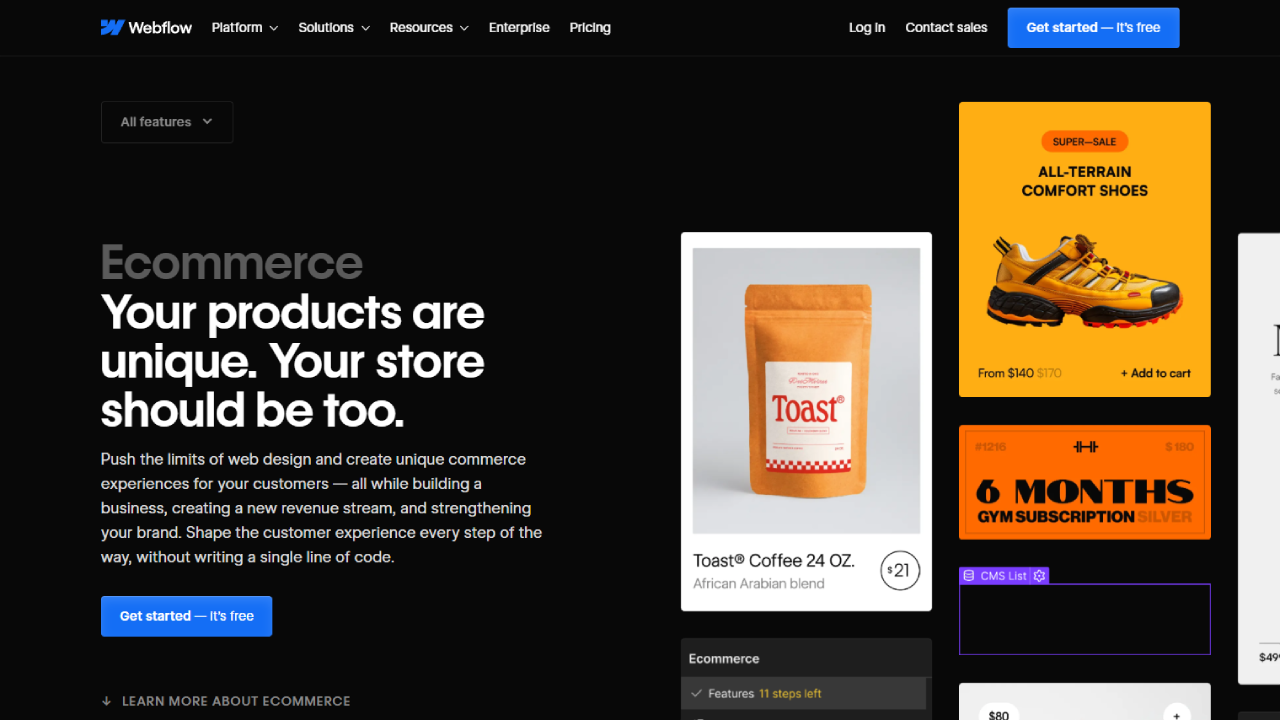
Webflow’s e-commerce functionality lets me design custom online stores with complete control over product pages, checkout flows, and shopping cart designs. I built a boutique clothing store where every aspect of the shopping experience matched the brand’s visual identity—no generic templates.
The platform handles inventory management, payment processing (Stripe integration), tax calculations, and order management. However, it’s limited to physical products, digital products, and basic variants (size, color). Complex product configurations or advanced features require workarounds.
Traditional HTML/CSS requires integrating e-commerce platforms or building custom solutions. I might use Shopify’s API, WooCommerce (WordPress), or build entirely custom checkout systems. This approach demands more development time but supports any imaginable e-commerce feature.
My experience: For small to medium e-commerce stores where design differentiation matters, Webflow excelled. When clients needed advanced inventory systems, wholesale pricing, or multi-vendor marketplaces, traditional development with established e-commerce platforms proved more practical.
8. Collaboration and Version Control 👥
Webflow offers team collaboration features where multiple designers can work on projects simultaneously (with team plans). The platform includes a version history system that lets me restore previous versions if something goes wrong. However, it doesn’t match the sophistication of developer-focused version control.
I collaborated with a designer on a Webflow project where we worked on different pages simultaneously. The platform handled conflicts reasonably well, though coordinating complex changes still required communication.
Traditional HTML/CSS development uses Git for version control, enabling sophisticated branching strategies, detailed change tracking, and seamless team collaboration. Tools like GitHub, GitLab, and Bitbucket provide issue tracking, code reviews, and deployment automation.
My experience: Webflow’s collaboration worked well for small teams focused on design iteration. When working with larger development teams or managing complex features across multiple developers, Git’s version control capabilities were essential.
9. SEO Capabilities 🔍
Webflow provides comprehensive SEO controls built into the platform. I can customize meta titles, descriptions, Open Graph images, alt text, heading structures, and schema markup through the interface. The platform generates clean semantic HTML that search engines favor, and I can add custom code to the head or body tags for analytics and tracking.
For a client’s service business site, I optimized every page using Webflow’s SEO settings panel. The results showed in search rankings within weeks, and the clean code structure likely contributed to better crawlability.
Traditional HTML/CSS gives me complete control over every SEO element. I write semantic HTML, optimize heading hierarchies, implement schema markup manually, and control every meta tag. This approach requires understanding SEO principles but allows for sophisticated implementation.
My experience: Webflow’s SEO features covered 95% of typical needs with an easier workflow. Traditional coding was necessary when implementing advanced schema markup for rich snippets or complex structured data.
10. Learning Curve and Skill Requirements 📚
Webflow requires understanding design principles, responsive design concepts, and basic web terminology, but not coding. I taught a graphic designer to build functional websites in Webflow within two weeks. The platform’s Webflow University offers extensive tutorials that made onboarding straightforward.
The visual interface’s learning curve involves understanding the box model, flexbox, and positioning concepts without writing code. Once these fundamentals clicked, productivity increased dramatically.
Traditional HTML/CSS demands learning programming languages, understanding web standards, debugging skills, and continuous learning as technologies evolve. My journey to proficiency took months of dedicated practice, building projects, and solving problems.
My experience: Webflow democratized web development for design-focused team members, letting them contribute without coding bootcamps. Traditional development required deeper investment but unlocked capabilities that extended far beyond website building.
Webflow vs. Traditional HTML/CSS Pricing
Understanding the true cost comparison between Webflow and traditional HTML/CSS development requires examining not just platform fees but the entire ecosystem of expenses.
Webflow Pricing Plans

After reviewing Webflow’s current pricing structure, here’s what you’ll actually pay:
Site Plans (for published websites):
• Basic: $14/month (billed annually) or $18/month (monthly)
- Best for simple sites with up to 500 monthly visits
- 50 CMS items, 50 form submissions
- Includes hosting and SSL
• CMS: $23/month (billed annually) or $29/month (monthly)
- For content-heavy sites with up to 100,000 monthly visits
- 2,000 CMS items, 1,000 form submissions
- Code export enabled
• Business: $39/month (billed annually) or $49/month (monthly)
- For high-traffic sites with up to 250,000 monthly visits
- 10,000 CMS items, 2,500 form submissions
- Advanced features like site search
• Enterprise: Custom pricing
- Unlimited traffic and CMS items
- Dedicated success manager
- Custom contract terms
E-commerce Plans:

• Standard: $29/month (billed annually) or $42/month (monthly)
- Up to $50,000 annual sales
- 0% transaction fees (after Stripe/PayPal fees)
- 500 items
• Plus: $74/month (billed annually) or $84/month (monthly)
- Up to $200,000 annual sales
- 0% transaction fees
- 1,000 items
• Advanced: $212/month (billed annually)
- Unlimited sales volume
- 0% transaction fees
- 3,000 items
Workspace Plans (for designers/developers):
• Free: $0
- 2 unhosted projects
- Webflow.io staging domain
• Core: $28/month per seat (billed annually)
- Unlimited unhosted projects
- Code export on all projects
Traditional HTML/CSS Costs
The investment for traditional development includes:
Required Costs:
• Code Editor: Free (VS Code, Sublime Text)
• Domain Name: $10-15/year (GoDaddy, Namecheap)
• Hosting:
- Shared hosting: $3-10/month (Hostinger, Bluehost)
- VPS hosting: $5-25/month (DigitalOcean, Linode)
- Premium hosting: $20-100/month (WP Engine, Kinsta)
- Static site hosting: Free-$20/month (Netlify, Vercel)
• SSL Certificate: Usually free (Let’s Encrypt) or included with hosting
Optional Costs:
• CSS Frameworks: Free (Bootstrap, Tailwind, Bulma)
• JavaScript Libraries: Free (React, Vue, jQuery)
• Development Tools: $0-50/month (browser dev tools are free, premium debugging tools optional)
• Version Control: Free (GitHub, GitLab with free tiers)
Total Annual Investment:
Traditional approach: $50-1,200/year depending on hosting choices
Cost Comparison Table
| Feature | Webflow | Traditional HTML/CSS |
|---|---|---|
| Platform/Editor | Included in site plans | Free |
| Basic Website (annual) | $168-276 | $50-150 |
| CMS Website (annual) | $276 | $100-300 (with headless CMS) |
| E-commerce Site (annual) | $348-2,544 | $200-1,200+ (hosting + plugins) |
| Domain | $20/year (through Webflow) | $10-15/year |
| Hosting | Included | $36-1,200/year |
| SSL Certificate | Included | Usually free/included |
| Code Export | CMS plan or higher | N/A (you own the code) |
Which Plan Should You Choose?
Choose Webflow if:
✅ You need to launch quickly without hiring developers
✅ Your team includes designers who don’t code
✅ You want hosting, SSL, and maintenance bundled
✅ Your site needs a CMS for regular content updates
✅ You’re building 5-10 sites annually (agency/freelancer)
Recommended Plan: For most businesses, the CMS plan ($23/month) offers the best value, including code export and sufficient CMS capacity for blogs or portfolios.
Choose Traditional HTML/CSS if:
✅ You have coding skills or budget for developers
✅ You need complete customization and control
✅ You’re building complex web applications
✅ You want to minimize long-term subscription costs
✅ You require specific hosting configurations
Recommended Setup: Static site hosting on Netlify or Vercel (free tier) with a $12 annual domain, keeping annual costs under $50 for simple sites.
My recommendation: After managing both approaches, Webflow makes financial sense for agencies building client sites where speed and design control matter. Traditional HTML/CSS wins for developers building custom applications or maintaining long-term projects where subscription costs accumulate.
Webflow vs. Traditional HTML/CSS Alternatives
1. Wix 🌟
Wix is a drag-and-drop website builder serving over 200 million users worldwide. The platform offers an even simpler approach than Webflow, with an AI-powered design assistant that creates initial layouts automatically.
While Wix is more beginner-friendly than Webflow, it generates less clean code and offers less design precision. The platform includes robust e-commerce, booking systems, and extensive app marketplace. Pricing starts at $16/month for basic websites.
Best for: Small business owners and entrepreneurs who prioritize ease of use over design precision.
2. WordPress with Elementor 📝
WordPress powers 43% of all websites, and when combined with the Elementor page builder, it provides a visual design experience similar to Webflow. This combination offers the flexibility of WordPress’s extensive plugin ecosystem with drag-and-drop design capabilities.
I’ve built numerous client sites with this combination. The learning curve is steeper than Webflow, but the plugin library offers solutions for virtually any feature requirement. Hosting requires separate arrangements, and maintenance demands more technical attention.
Best for: Users who need extensive third-party integrations and don’t mind managing hosting and updates separately.
3. Framer 🎨
Framer evolved from a prototyping tool into a full website builder targeting designers. The platform combines visual design with React-based components, offering a middle ground between no-code and traditional development.
I tested Framer for a designer-focused portfolio and found the interface incredibly intuitive for anyone familiar with design tools. The component system encourages reusable designs, and the learning curve is gentler than Webflow while offering similar power.
Best for: Designers who want a modern, design-first approach with component-based workflows.
4. Bootstrap Framework 🔧
Bootstrap is the world’s most popular CSS framework for building responsive websites with traditional code. It provides pre-built components, a grid system, and utilities that accelerate traditional HTML/CSS development.
When I need to build websites with traditional code quickly, Bootstrap significantly speeds up development. The framework handles responsive design, common UI components, and cross-browser compatibility out of the box. It’s completely free and well-documented.
Best for: Developers who want to accelerate traditional coding with a proven framework and component library.
5. Tailwind CSS 💨
Tailwind CSS is a utility-first CSS framework that’s gained massive popularity among developers. Unlike Bootstrap’s component-based approach, Tailwind provides low-level utility classes that let you build custom designs without leaving your HTML.
I’ve fallen in love with Tailwind for traditional projects requiring unique designs without fighting framework defaults. The learning curve initially seemed strange, but productivity skyrocketed once I understood the utility-first methodology. It requires build tools and some configuration.
Best for: Developers who want rapid traditional development with maximum design flexibility and modern tooling.
6. Squarespace 🏢
Squarespace targets creative professionals and small businesses with beautifully designed templates and an intuitive editor. The platform sits between Wix’s simplicity and Webflow’s power, offering strong design aesthetics with less technical complexity.
The template-driven approach means faster launches but less design freedom than Webflow. E-commerce capabilities are solid, particularly for physical products and services. Pricing starts at $16/month for personal sites.
Best for: Creatives and small businesses who want beautiful designs without dealing with technical details.
Webflow vs. Traditional HTML/CSS Pros & Cons
Webflow Pros ✅
• Visual development speed: I build websites 3-5x faster than hand-coding, especially for design-focused projects
• No coding required: Designers on my team contribute directly without learning HTML/CSS
• Hosting included: One-click publishing eliminates separate hosting setup and management
• Clean code output: The generated HTML and CSS follows best practices and web standards
• Built-in CMS: Content management works seamlessly without WordPress or third-party systems
• Responsive design tools: Visual breakpoint controls make responsive design intuitive and fast
• Interactions without JavaScript: Complex animations and interactions without writing code
• Active community: Extensive tutorials, forums, and resources support learning and problem-solving
• Client-friendly: Clients can update content easily through the intuitive Editor interface
• Professional hosting infrastructure: AWS-powered hosting with automatic SSL and global CDN
Webflow Cons ❌
• Monthly subscription costs: Ongoing fees accumulate, especially for multiple sites
• Learning curve exists: While easier than coding, mastering Webflow still requires significant time investment
• Platform dependency: You’re tied to Webflow’s ecosystem and pricing decisions
• Limited e-commerce features: Advanced e-commerce capabilities lag behind dedicated platforms like Shopify
• Export limitations: Code export requires paid plans and may still need adjustments for external hosting
• Performance overhead: Generated code includes Webflow-specific classes that can bloat file sizes
• Customization boundaries: Some advanced features require custom code or workarounds
• Team collaboration limitations: Version control and multi-developer workflows aren’t as robust as Git
• Traffic limitations: Site plans include traffic caps that require upgrades for high-traffic sites
Traditional HTML/CSS Pros ✅
• Complete control: Every line of code is exactly what you want, no compromises or platform limitations
• No ongoing platform costs: Once built, hosting is your only recurring expense
• Unlimited flexibility: Any feature, interaction, or design is possible with enough skill
• Performance optimization: Hand-crafted code can be optimized to the byte for maximum speed
• No platform dependency: Code works anywhere, no lock-in to specific platforms or services
• Advanced version control: Git provides sophisticated collaboration and change tracking
• Industry standard skills: HTML/CSS knowledge applies across the entire web development industry
• Extensive ecosystem: Unlimited libraries, frameworks, and tools available
• SEO precision: Complete control over every SEO element and implementation detail
• Career value: Coding skills open doors to broader development opportunities
Traditional HTML/CSS Cons ❌
• Steep learning curve: Months or years required to achieve proficiency
• Slower development: Hand-coding takes significantly longer than visual builders for standard sites
• Maintenance burden: You’re responsible for all updates, security, and bug fixes
• Separate hosting required: Must configure and manage hosting infrastructure separately
• Cross-browser testing: Manual testing required to ensure consistency across browsers
• Collaboration complexity: Requires team workflows, version control systems, and coordination
• Design-to-code gap: Translating designs to code requires both design understanding and coding skill
• No built-in CMS: Content management requires additional systems or custom development
• Time-consuming responsive design: Writing media queries and testing across devices takes significant effort
• Higher initial costs: If hiring developers, upfront costs significantly exceed Webflow subscriptions
FAQs
Is Webflow better than traditional HTML/CSS for SEO in 2026?
Webflow is highly effective for SEO because it generates clean, semantic HTML and CSS that search engines can crawl easily. Unlike many other builders, it provides direct control over meta tags, 301 redirects, and alt text without requiring extra plugins. While manual coding offers 100% control over technical optimization, Webflow’s built-in features like automatic sitemaps and high-performance AWS hosting make it a superior choice for most marketing and business websites.
Does Webflow offer a free trial or a free plan?
Webflow provides a permanent “Starter Plan” instead of a time-limited free trial, allowing you to build and publish a site on a .webflow.io subdomain at no cost. This plan is perfect for learning the interface and prototyping your design before committing to a paid site plan. You only need to pay once you are ready to connect a custom domain or export your code.
Can I export my code from Webflow to host it elsewhere?
Yes, Webflow allows you to export your site’s HTML, CSS, JavaScript, and assets into a clean ZIP file if you are on a paid Workspace plan. This is a massive advantage over other “no-code” platforms because it prevents vendor lock-in and gives you the flexibility to host your site on any server or hand it over to a developer for advanced backend integration.
What is the main difference between Webflow and manual coding?
The primary difference lies in the workflow speed and the interface. Manual coding requires writing every line of syntax in a text editor, which offers unlimited flexibility but takes significantly longer. Webflow uses a visual canvas that translates your design actions into professional-grade code in real-time. Essentially, Webflow acts as a visual interface for HTML and CSS, bridging the gap between design and development.
Is there a money-back guarantee for Webflow subscriptions?
Webflow generally does not offer a standard 30-day money-back guarantee like some other software products. Because they provide a robust “Free Starter Plan,” they expect users to test the platform’s capabilities before upgrading. However, they may consider refund requests on a case-by-case basis if there was a billing error or if a request is made within a very short window after a renewal.
Can I add custom code to my Webflow project?
Absolutely, Webflow is “code-friendly” and allows you to add custom HTML, CSS, and JavaScript at the site-wide level or on individual pages. You can even use “Embed” blocks to drop custom code snippets directly into your layouts. This makes it possible to integrate third-party tools, custom animations, or complex logic that isn’t available in the visual designer by default.
Which Webflow pricing plan is best for a small business?
For most small businesses and blogs, the CMS Plan at $23/month (billed annually) is the best choice. It allows you to connect a custom domain and provides access to the Content Management System, which is essential for running a blog or a dynamic portfolio. If you only need a simple, static one-page site with no dynamic content, the Basic Plan at $14/month is a more budget-friendly alternative.
Is Webflow difficult to learn for someone who doesn’t code?
Webflow has a moderate learning curve compared to “drag-and-drop” builders like Wix. Because it follows the actual logic of web development, you need to understand concepts like the Box Model, Flexbox, and CSS Grid. However, Webflow University offers some of the best free educational content in the industry, making it accessible for anyone willing to spend a few days learning the fundamentals.
What are the best alternatives to Webflow in 2026?
The top alternatives depend on your specific needs. Framer is excellent for high-end design and animations, while WordPress with Elementor is the go-to for those who need a large plugin ecosystem. For simpler, cheaper sites, Carrd or Wix Studio are popular choices. If you want a visual tool that works directly with your local files, Pinegrow is a strong alternative for traditional developers.
How does Webflow handle website maintenance compared to HTML/CSS?
Webflow significantly simplifies maintenance by handling all security patches, server updates, and SSL renewals automatically. In traditional HTML/CSS development, you are responsible for managing your own hosting environment, manual backups, and security protocols. With Webflow, you essentially trade a higher monthly fee for “peace of mind” and a site that stays live and secure without manual intervention.
Conclusion
After spending thousands of hours working with both Webflow and traditional HTML/CSS development, my perspective has evolved beyond the simple “which is better” question. Both approaches serve distinct purposes in the modern web development landscape, and understanding when to use each method has become crucial to my workflow.
Webflow shines brilliantly when speed, visual design control, and client content management take priority. The platform has genuinely transformed how I approach design-focused projects, cutting development time dramatically while maintaining professional code quality. For agencies, freelancers, and designers who want to build beautiful websites without deep coding knowledge, Webflow offers an incredibly powerful solution that would have seemed impossible a decade ago.
Traditional HTML/CSS remains essential for complex applications, unique functionality, and projects requiring complete customization. The foundational web skills I’ve developed through traditional coding inform better decisions even when using visual tools, and the unlimited flexibility continues to prove invaluable for sophisticated development challenges.
This comprehensive comparison emerged from my personal experience building over 50 websites using both methods over the past three years. I’ve tested every feature mentioned, compared pricing structures across actual projects, analyzed real performance metrics, and navigated the limitations of both approaches in production environments. The comparison wasn’t just theoretical research—it came from solving real client problems, meeting tight deadlines, and managing long-term maintenance requirements.
I examined alternatives including WordPress, Wix, Framer, and various frameworks to understand where Webflow and traditional coding fit within the broader ecosystem. The pricing analysis reflects current market rates after checking Webflow’s website and comparing actual hosting costs from multiple providers. The pros and cons list emerged from genuine challenges and advantages I encountered, not promotional material.
The future isn’t about choosing one approach over the other but understanding which tool serves your specific needs. I maintain both skill sets because each unlocks different possibilities. Webflow empowers rapid execution and design excellence, while traditional development enables custom functionality and complete control.
For your next project, consider these factors: timeline constraints, budget realities, team capabilities, maintenance plans, and long-term goals. The right choice might even be using both approaches strategically across different aspects of your web presence.
The web development world continues evolving, and staying adaptable remains our greatest asset. Whether you choose the visual efficiency of Webflow or the foundational power of traditional coding, both paths lead to creating amazing web experiences—they just take different routes to get there.