

You want to know one thing before you hand over an email address: does Linguix actually cost you anything to start? Short answer, no. There is a genuinely free plan, and you don’t need a card to use it.
What is murkier is the paid side, where trial offers and discounts shift constantly. Here is exactly what the free tier covers, what triggers a payment, and how Linguix compares with Grammarly.
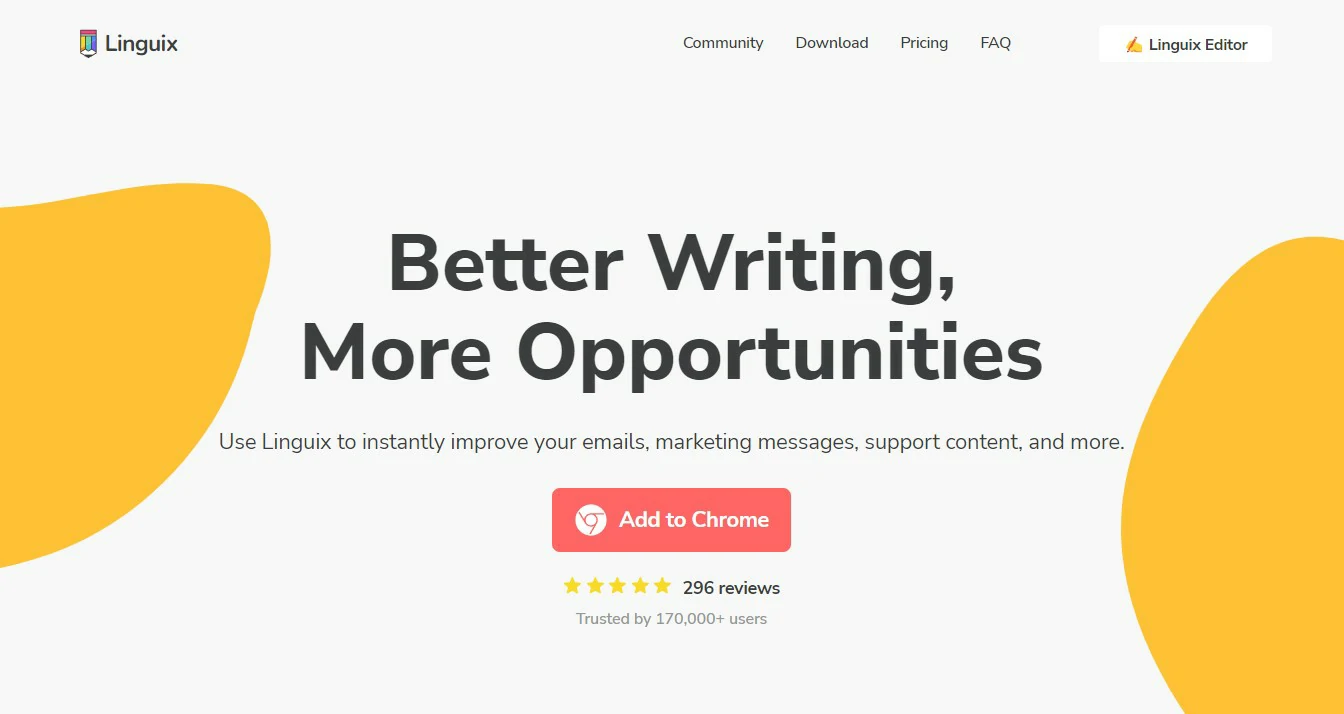
The short answer on the Linguix free trial
- Is there a free plan? Yes, and it does not expire. It covers basic grammar, spelling and punctuation checking in the browser extension and the web editor.
- Do you need a credit card? No. An email address and a password gets you in.
- Where is the catch? The free tier flags obvious errors. Paraphrasing, rewrites, style and tone suggestions, templates and the AI writing features sit behind the paid Pro plan.
- Is there a timed free trial? Sometimes. Promotions come and go; the dependable free access is the free plan, not a countdown.
- Can you cancel easily? Yes, from the Subscription tab in your account settings. Your account drops back to the free plan when the paid period ends.
Best for: writers, students and non-native English speakers who want a fast, uncluttered checker and a cheaper annual bill than Grammarly.
Not ideal for: anyone who needs built-in plagiarism checking, heavy document collaboration, or a language other than English.
Features of Linguix
Built-in Vocabulary
A built-in vocabulary tool surfaces stronger alternatives inline, so you are not tabbing out to a thesaurus mid-sentence.
Integrations
The extension plugs into Medium, WordPress, Gmail, Google Docs and most other web editors, so corrections happen where you already write rather than in a separate tab.
Calculate writing score
Every document gets a readability score alongside word count and reading time, a quick check that you have not written something denser than your audience wants.
Linguix free trial vs the Linguix free plan
These two get mixed up constantly, and the difference decides whether you ever see a payment screen. The free plan is permanent: create an account, install the extension, and it keeps checking your writing indefinitely. Nothing expires and nothing auto-charges, because you never entered a card.
A free trial is a temporary unlock of the paid Pro features. Linguix has run timed trials at various points, but they come and go, so confirm any specific trial length on the official pricing page before planning around it.
What the free plan actually gives you
- Real-time grammar, spelling and punctuation correction as you type
- The browser extension, which works in Gmail, Google Docs, WordPress, LinkedIn and most web text boxes
- The web editor for pasting in and cleaning up a draft you already wrote
- Basic writing statistics such as word count, reading time and readability
What stays locked until you pay
- Paraphrasing and full-sentence rewrites
- Style, tone and clarity suggestions rather than just error flags
- The content template library and snippet shortcuts
- Advanced vocabulary and synonym suggestions
- Team features: shared style guides, an insights dashboard, per-user statistics and central billing
- Plagiarism checking, which is sold separately as credits even on paid plans
A grammar checker will not draft for you, though. If the blank page is the real bottleneck, an AI content writing tool is the better spend.
How to cancel before you are billed again
- Sign in at linguix.com, open account settings and use the Subscription tab to cancel
- Access runs to the end of the paid period, then reverts to free
- Cancel a day before the renewal date; fees are not prorated
Linguix pricing: what the paid plans cost
Be careful with pricing you find on comparison sites, including this one. Linguix has repriced more than once and runs long discount campaigns, so the figure you see depends on when you look. The table below therefore compares plans in relative terms rather than quoting a figure that would date within weeks. Check the official Linguix pricing page for current numbers before you buy.
| Plan | Billing | Effective monthly | Who it suits |
|---|---|---|---|
| Free | $0, no card | $0 | Anyone who just wants errors caught |
| Pro monthly | Rolling monthly | Highest per month | Short projects, or testing before committing |
| Pro annual | Billed once for 12 months | Lower than monthly | The usual sweet spot for regular writers |
| Pro 2-year | Billed once for 24 months | Lowest per month | Only if you are already sure you will keep it |
| Business | Quote from sales | Varies | Teams of three or more, style guides, admin controls |
Two things to weigh before picking a term. A multi-year deal only wins if you actually keep using it, and because there are no refunds, it is a commitment rather than a trial with an escape hatch.
Linguix pros and cons
What works well, in our assessment
- Genuinely free entry point, no card, no expiry
- Clean, uncluttered editor that stays out of the way while you write
- Suggestions appear quickly and rarely slow a page down
- Cheaper annually than the main alternative
- Snippets and templates save real time on repetitive writing
Where it falls short
- No plagiarism checker included; it is sold separately as credits, even on paid plans
- The free tier only catches mechanical errors, underselling the paid product
- English only, which rules it out for multilingual teams
- Subscriptions are non-refundable with no proration, so long terms carry real risk
- Public pricing has changed more than once, which makes it hard to trust any single quoted figure
Linguix vs Grammarly: which free option goes further?
Grammarly is the default comparison, though not the only one; our roundup of the best Grammarly alternatives covers the wider field. Both offer a permanent free tier covering grammar, spelling and punctuation, and both put rewriting and tone tools behind a subscription. The differences that matter are price, breadth and polish.
| Linguix | Grammarly | |
|---|---|---|
| Free tier | Permanent, no card, basic corrections | Permanent, no card, basic corrections plus limited AI prompts |
| Typical paid cost | Lower on an annual term | Higher, especially month to month |
| Plagiarism check | Paid add-on credits only | Included on the paid plan |
| Languages | English only | English only, with dialect variants |
| Integrations | Browser, mobile keyboard, common web apps | Wider, including desktop apps and Microsoft Office |
| Team controls | Style guides and dashboard on Business | More mature admin and brand-tone tooling |
Pick Linguix if annual price is the deciding factor and you want a lightweight checker. Pick Grammarly if you need bundled plagiarism detection, deeper desktop integration or mature team admin. Undecided? Run both free plans on a fortnight of your own writing; that costs nothing and settles it.
How we assessed Linguix
This is a research-based buying guide, not a long-term lab test. We checked the free signup flow, the public pricing page and the official help centre documentation on billing and cancellation. The pros and cons above are our own assessment, not a summary of other reviews. We did not benchmark accuracy against Grammarly sentence by sentence, or test the Business admin console. Pricing and feature splits change without notice, so verify cost details on the official site.
Frequently Asked Questions
Is the Linguix free plan really free forever, or does it become a paid trial?
It is a permanent free tier, not a countdown. Because you never enter card details, nothing can auto-charge you. Separate timed trials of the Pro features have come and gone over the years, so check the pricing page for whatever offer is live now.
Do I need a credit card to start the Linguix free trial?
No. Signing up needs only an email address and a password. If a promotional Pro trial is running and it does ask for a card, read the renewal terms first, because Linguix does not prorate refunds once a paid term begins.
How do I cancel Linguix, and can I get a refund?
Open your account settings at linguix.com, go to the Subscription tab and cancel. Access continues until the paid period ends, then the account drops to the free plan. Refunds are the sticking point: Linguix documents subscriptions as non-refundable, so cancel before the renewal date, not after.
Is Linguix worth paying for, or is the free plan enough?
The free plan is enough if you only want typos and grammar slips caught. Pay when you find yourself wanting rewrites, tone adjustments or templates. If a month passes without hitting a locked feature, stay free.
Does the Linguix free trial include a plagiarism checker?
No, and neither do the standard paid plans. Plagiarism checking is sold as separate credits. If bundled plagiarism detection matters, Grammarly includes it on its paid tier and is the fairer comparison there.
Is Linguix good for beginners and non-native English speakers?
It suits both well. Corrections appear inline with short explanations and the interface is uncluttered. The free tier catches the mechanical mistakes that trip people up most, though the style coaching learners benefit from sits on the paid plan.
Where does Linguix work: browsers, mobile, Gmail, Google Docs?
The browser extension covers most web text fields, including Gmail, Google Docs, WordPress and social platforms, and a mobile keyboard carries corrections to your phone. Support is English only, and native desktop app coverage is narrower than Grammarly offers.
The verdict
If you write occasionally and just want embarrassing errors caught before you hit send, the free plan is the whole answer. Install it, ignore the upgrade prompts, spend nothing.
If you write daily and the rewriting and tone tools would save you real time, the annual Pro term is the sensible choice on price alone. For heavier drafting work, pair it with one of the long-form AI writing tools we rate.
One warning before you buy: the no-refund, no-proration policy makes the two-year plan a commitment, not an experiment. Do not let a discount banner push you past the term you need.
Sensible next step: create a free account, run it over a week of your real writing, and note every moment it pushed you to upgrade. If that list stays short, you have your answer.