

Let’s be honest: most “what is AI automation” explainers are buzzword soup. So here’s the plain-English version. AI automation is what you get when you add real decision-making to ordinary task automation — instead of a system that blindly follows “if this, then that,” you get one that can read a messy email, work out what the customer actually wants, and act on it. We’ve built these workflows on live projects in tools like n8n and Zapier, and this guide breaks down what AI automation really is, where it genuinely helps, where it doesn’t, and how to start without wasting money.
Businesses today operate in an environment where speed, efficiency, and personalization are critical. Customers expect instant responses, employees need tools that eliminate tedious work, and organizations must find ways to do more with fewer resources. Traditional automation has helped companies achieve some of these goals by automating repetitive processes, but AI automation takes efficiency to an entirely new level. Instead of simply following predefined instructions, AI-powered systems can analyze information, learn from data, understand context, and make intelligent decisions.
The rapid growth of technologies such as machine learning, natural language processing, generative AI, and robotic process automation has made AI automation accessible to organizations of all sizes. Large enterprises are using AI to manage complex business operations, while small businesses are leveraging affordable AI tools to automate marketing, customer service, sales, and administrative tasks. Even freelancers and individual professionals are using AI automation to increase productivity and improve work quality.
As AI continues to evolve, automation is becoming one of the most important drivers of digital transformation. Organizations that successfully implement AI automation are improving efficiency, reducing operational costs, delivering better customer experiences, and gaining a competitive advantage. This guide explores what AI automation is, how it works, its benefits, real-world applications, the best tools available in 2026, implementation strategies, challenges, and future trends.
📌 Key Takeaways
- AI automation = automation that can think. It analyzes data, understands context, and makes decisions instead of just following fixed rules.
- It shines on messy, judgment-heavy work — support replies, lead routing, content drafts, data cleanup — not just simple “move data from A to B” tasks.
- You don’t need a big budget. Small businesses can start with one painful workflow and a tool like n8n, Zapier, or Make.
- The real risks are data quality, privacy, and over-automating. Start small and keep a human in the loop.
What Is AI Automation?
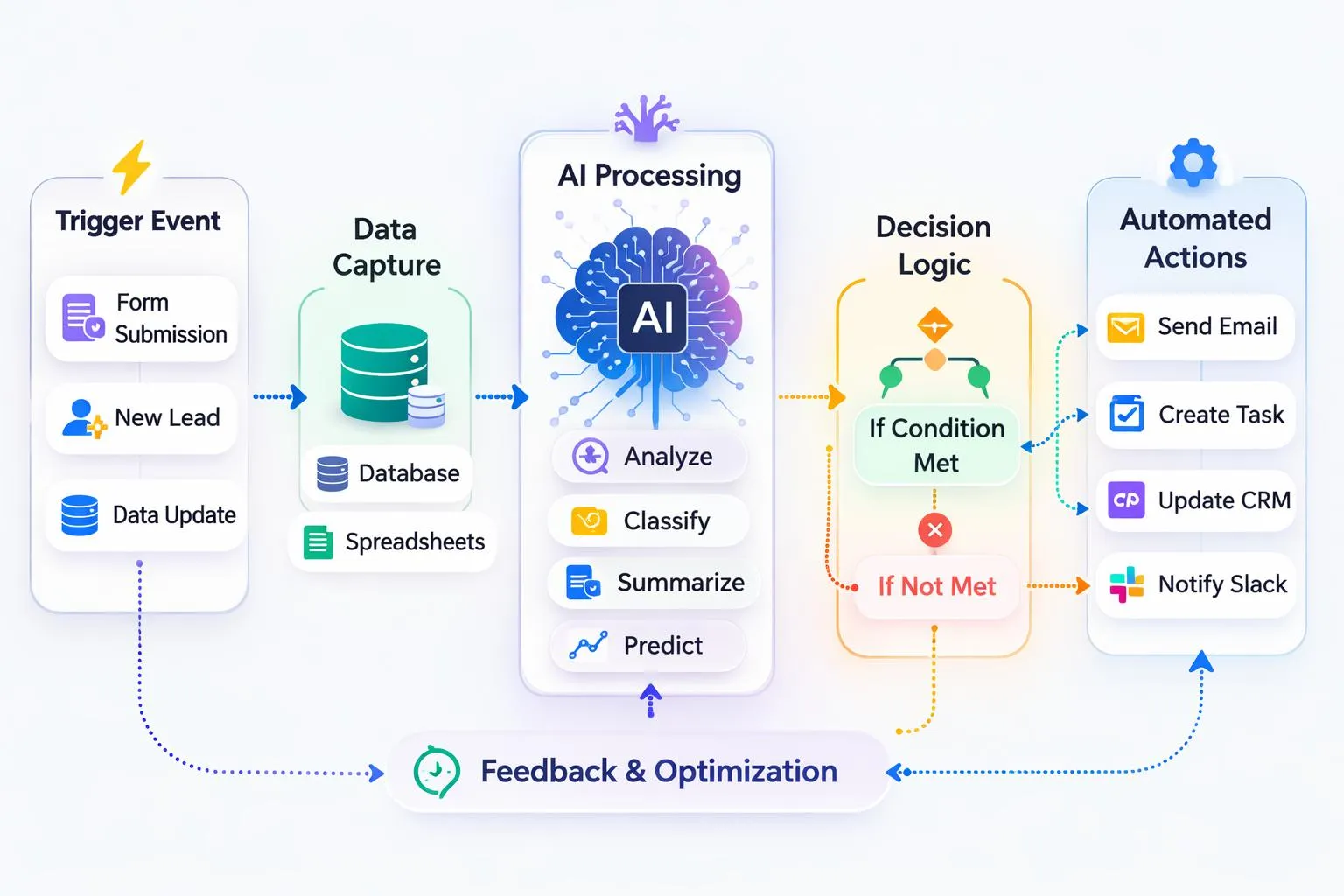
AI automation refers to the use of artificial intelligence technologies to automate tasks, processes, and workflows that would normally require human intelligence. Unlike traditional automation, which follows fixed rules and instructions, AI automation can learn from data, adapt to changing conditions, and make decisions based on context. This allows businesses to automate not only repetitive tasks but also more complex activities that involve analysis, prediction, and problem-solving.
To understand AI automation, consider the difference between a standard automated email response and an AI-powered customer support system. A traditional automated response sends the same message whenever a specific trigger occurs. An AI-powered system, however, can analyze the customer’s message, determine the intent behind the inquiry, assess urgency, retrieve relevant information, and generate a personalized response. This ability to understand and respond intelligently is what sets AI automation apart from conventional automation.

AI automation relies on several technologies working together. Machine learning enables systems to identify patterns and improve performance over time. Natural language processing allows computers to understand and generate human language. Computer vision enables machines to analyze images and videos. Predictive analytics helps organizations forecast future outcomes based on historical data. When combined with workflow automation tools, these technologies create intelligent systems capable of handling a wide range of business processes.
The rise of generative AI has further expanded the capabilities of AI automation. Modern AI systems can create content, summarize documents, write code, analyze data, generate reports, and assist with decision-making. These capabilities allow businesses to automate tasks that were previously considered too complex for machines. As a result, AI automation is now being used in industries ranging from healthcare and finance to retail, education, and manufacturing.
One of the key advantages of AI automation is scalability. Human teams can only handle a limited amount of work at any given time, whereas AI systems can process thousands of tasks simultaneously. For example, an AI chatbot can assist thousands of customers at once, while a human support team would require significant staffing to achieve the same level of service. This scalability makes AI automation particularly valuable for growing organizations that need to manage increasing workloads efficiently.
Another important characteristic of AI automation is continuous improvement. Traditional automation systems remain static unless manually updated. AI-powered systems, on the other hand, can learn from interactions and improve their performance over time. The more data they process, the better they become at making accurate predictions and recommendations. This ability to evolve and adapt makes AI automation a powerful tool for organizations seeking long-term efficiency gains.
Why AI Automation Is Becoming Essential in 2026
This isn’t hype for its own sake. Independent research — like McKinsey’s State of AI reports and IBM’s overview of AI automation — shows adoption climbing fast as businesses chase measurable efficiency gains. Here’s what’s actually driving that shift.

The importance of AI automation has grown dramatically over the past few years, and in 2026 it is considered one of the most transformative technologies available to businesses. Several factors are driving this rapid adoption, including increasing operational complexity, rising customer expectations, workforce challenges, and advancements in AI technology.
Modern organizations generate enormous amounts of data every day. Customer interactions, website activity, sales transactions, support tickets, emails, and social media engagement all contribute to an ever-expanding pool of information. Manually analyzing and acting on this data is becoming increasingly difficult. AI automation helps businesses process large volumes of information quickly and accurately, enabling faster and more informed decision-making.
Customer expectations are also changing. Consumers expect personalized experiences, instant responses, and seamless interactions across multiple channels. Meeting these expectations manually can be expensive and time-consuming. AI automation allows businesses to deliver personalized recommendations, provide 24/7 support, and respond to customer inquiries almost instantly. This not only improves customer satisfaction but also strengthens brand loyalty.
The labor market has also played a role in accelerating AI adoption. Many organizations face challenges related to talent shortages and rising labor costs. AI automation helps address these issues by handling repetitive tasks that would otherwise require additional staff. Employees can then focus on higher-value activities such as strategy, creativity, relationship management, and innovation.
Generative AI has further increased the value of automation. Businesses can now automate content creation, report generation, document summarization, and other knowledge-based tasks. This expands automation beyond routine operational processes and into areas that traditionally required specialized expertise. As AI tools become more powerful and user-friendly, organizations of all sizes are finding new ways to integrate automation into their workflows.
Perhaps the most compelling reason AI automation is becoming essential is its impact on competitiveness. Organizations that successfully implement AI-powered workflows can operate more efficiently, respond faster to market changes, and deliver better customer experiences. In many industries, AI automation is no longer viewed as an optional enhancement but as a strategic necessity.
AI Automation vs Traditional Automation
Comparison Table
| Feature | Traditional Automation | AI Automation |
|---|---|---|
| Rule-Based Workflows | Yes | Yes |
| Learns From Data | No | Yes |
| Handles Unstructured Data | No | Yes |
| Decision Making | Limited | Advanced |
| Adaptability | Low | High |
| Customer Personalization | Minimal | Extensive |
| Continuous Improvement | No | Yes |
| Predictive Capabilities | No | Yes |
Traditional automation has been used for decades to streamline repetitive tasks. It works by following predefined rules and executing actions whenever specific conditions are met. Examples include sending automatic email notifications, generating invoices, or updating records in a database. While effective for simple tasks, traditional automation is limited because it cannot adapt to changing circumstances or learn from experience.
AI automation builds upon traditional automation by adding intelligence and adaptability. Instead of simply following rules, AI systems analyze data, understand context, and make decisions based on patterns and insights. This enables businesses to automate more complex processes, such as customer support, fraud detection, predictive maintenance, and personalized marketing.
For example, a traditional support system may route customer inquiries based on keywords. An AI-powered system can understand the intent behind the message, determine urgency, recommend solutions, and even generate a personalized response. This level of sophistication allows organizations to automate tasks that previously required human judgment.
The combination of automation and intelligence makes AI automation a more powerful solution for modern businesses. While traditional automation remains valuable for routine processes, AI automation is increasingly becoming the preferred approach for organizations seeking flexibility, scalability, and continuous improvement.
How AI Automation Works
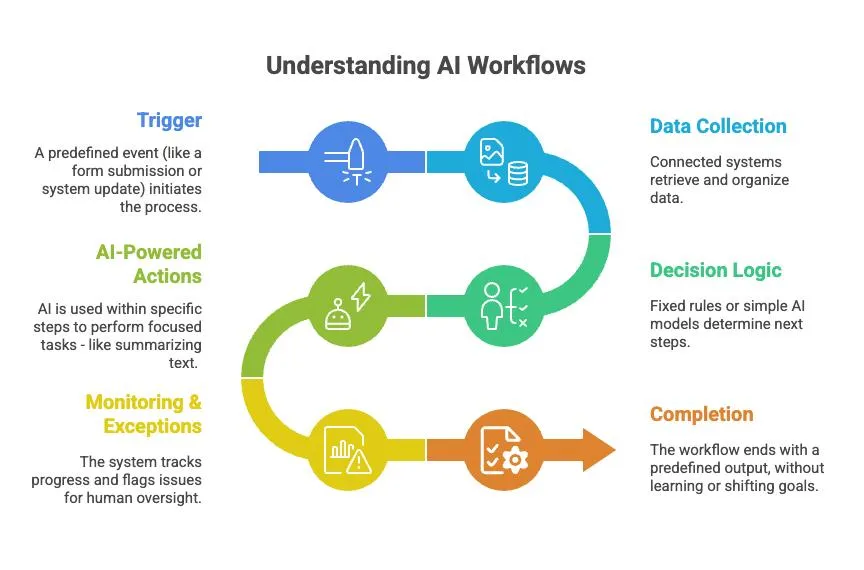
Data Collection and Processing
Every AI automation system begins with data. Information is collected from various sources such as websites, applications, customer interactions, sensors, databases, and business software. This data is then cleaned, organized, and structured to ensure accuracy and consistency. Proper data preparation is essential because the quality of AI outputs depends heavily on the quality of the data being used.
Machine Learning and Decision Making
Machine learning algorithms analyze data to identify patterns and relationships. These insights enable AI systems to make predictions, classify information, and recommend actions. For example, a sales automation platform might analyze customer behavior to identify leads most likely to convert into paying customers. The system then prioritizes those leads for follow-up.
Continuous Learning and Optimization
One of the defining characteristics of AI automation is its ability to improve over time. As systems process more data and receive feedback, they refine their models and become more accurate. This continuous learning process allows organizations to achieve better results without constantly redesigning workflows.
Major Benefits of AI Automation

AI automation has become one of the most valuable investments organizations can make because its benefits extend across virtually every department. While many businesses initially adopt AI to save time, they quickly discover that automation delivers advantages in productivity, cost management, customer experience, scalability, and decision-making. As AI systems continue to evolve, the return on investment from automation initiatives is becoming increasingly significant.
Increased Productivity
One of the most immediate benefits of AI automation is the dramatic increase in productivity it provides. Employees often spend a considerable portion of their workday performing repetitive administrative tasks such as data entry, scheduling meetings, updating records, processing invoices, generating reports, and responding to routine inquiries. While these activities are necessary, they consume valuable time that could be devoted to more strategic and creative work.
AI automation eliminates much of this manual effort by performing repetitive tasks automatically. For example, an AI-powered system can extract information from documents, categorize emails, generate summaries, and update databases without human intervention. This allows employees to focus on problem-solving, innovation, customer relationships, and other high-value activities. As a result, organizations can accomplish more work with the same workforce while improving employee satisfaction and engagement.
Cost Reduction
Operational costs are a major concern for businesses of all sizes. Hiring additional staff to handle growing workloads can be expensive, particularly when tasks are repetitive and predictable. AI automation reduces the need for manual intervention, enabling organizations to manage larger volumes of work without proportional increases in labor costs.
For example, customer support teams often face significant expenses related to staffing and training. AI chatbots can handle a large percentage of routine customer inquiries, reducing the workload on human agents and lowering support costs. Similarly, finance departments can automate invoice processing and expense management, reducing administrative overhead. These efficiencies allow businesses to allocate resources more effectively and improve profitability.
Improved Accuracy
Human error is an unavoidable aspect of manual work. Mistakes in data entry, calculations, document processing, and communication can lead to costly consequences. AI automation helps minimize these errors by performing tasks consistently according to predefined standards and learned patterns.
In industries such as healthcare and finance, accuracy is particularly important. AI-powered systems can analyze large datasets with remarkable precision, helping organizations make informed decisions while reducing the risk of mistakes. Improved accuracy not only enhances operational efficiency but also strengthens customer trust and regulatory compliance.
Enhanced Customer Experience
Customer expectations have changed dramatically in recent years. Consumers expect fast responses, personalized interactions, and seamless experiences across multiple channels. Meeting these expectations manually can be challenging, especially for organizations with limited resources.
AI automation enables businesses to provide faster and more personalized service. Chatbots and virtual assistants can answer questions instantly, recommend products based on customer preferences, and resolve routine issues without requiring human involvement. These capabilities improve customer satisfaction while reducing response times and operational costs.
Better Decision-Making
Modern businesses generate vast amounts of data, but data alone has limited value unless it can be transformed into actionable insights. AI automation excels at analyzing information and identifying patterns that might be difficult for humans to detect. By processing data in real time, AI systems help organizations make faster and more informed decisions.
For example, retailers can use AI to forecast demand, optimize inventory levels, and identify emerging trends. Financial institutions can detect suspicious transactions and assess risk more effectively. Marketing teams can analyze campaign performance and adjust strategies based on customer behavior. These insights allow organizations to respond quickly to changing conditions and capitalize on new opportunities.
Benefits at a Glance
| Benefit | Business Impact |
|---|---|
| Productivity | More work completed in less time |
| Cost Savings | Reduced operational expenses |
| Accuracy | Fewer errors and better compliance |
| Customer Experience | Faster and more personalized service |
| Scalability | Growth without proportional staffing increases |
| Decision-Making | Better insights and forecasting |
Top AI Automation Use Cases in 2026
AI automation is no longer limited to a handful of industries. Organizations across sectors are finding innovative ways to use AI to streamline operations, improve customer experiences, and gain competitive advantages. The following use cases represent some of the most impactful applications of AI automation in 2026.
Marketing Automation

Marketing has become one of the most AI-driven functions within modern organizations. AI automation enables marketers to analyze customer behavior, personalize communications, optimize advertising campaigns, and create content at scale. Instead of manually managing every aspect of a marketing strategy, teams can use AI to automate repetitive tasks while focusing on creativity and strategy.
AI-powered marketing platforms can segment audiences based on demographics, interests, and purchasing behavior. This allows businesses to deliver highly targeted messages that resonate with specific customer groups. Email campaigns, for example, can be automatically personalized based on a recipient’s preferences and past interactions.
Generative AI has also transformed content creation. Businesses can now use AI tools to draft blog posts, social media updates, email newsletters, product descriptions, and advertising copy. While human oversight remains important, AI significantly reduces the time required to create marketing materials.
Common Marketing Tasks Automated by AI
| Task | AI Benefit |
|---|---|
| Email Campaigns | Personalized communication |
| Content Creation | Faster production |
| Audience Segmentation | Better targeting |
| Ad Optimization | Higher ROI |
| Social Media Scheduling | Consistent engagement |
| Analytics Reporting | Automated insights |
Customer Support Automation
A practical starting point here is an AI support chatbot — see our hands-on Lyro AI review for how one handles real customer questions inside a live helpdesk.

Customer support is one of the most widely adopted AI automation applications. Businesses face increasing pressure to provide fast, reliable, and personalized service. AI-powered chatbots and virtual assistants help meet these expectations by handling routine inquiries, troubleshooting common issues, and guiding customers through processes.
Unlike traditional scripted chatbots, modern AI assistants can understand natural language and engage in more meaningful conversations. They can interpret customer intent, retrieve relevant information, and provide accurate responses in real time. This reduces wait times and improves customer satisfaction.
AI automation also helps support teams prioritize tickets, route inquiries to the appropriate departments, and identify recurring issues. By automating these tasks, organizations can improve efficiency while allowing human agents to focus on more complex cases.
Customer Support Metrics Improved by AI
| Metric | Impact |
|---|---|
| Response Time | Significantly reduced |
| Resolution Speed | Faster issue handling |
| Support Costs | Lower operational expenses |
| Customer Satisfaction | Improved service quality |
| Availability | 24/7 support |
Sales Automation
Sales teams are increasingly using AI automation to improve efficiency and increase conversion rates. AI-powered CRM systems can analyze customer behavior, identify high-potential leads, and recommend next actions. This enables sales representatives to focus their efforts on prospects most likely to convert.
Lead scoring is one of the most valuable applications of AI in sales. By analyzing historical data, AI systems can determine which leads are most likely to become customers. This helps sales teams prioritize opportunities and allocate resources more effectively.
AI can also automate follow-up communications, schedule meetings, generate sales forecasts, and provide insights into customer preferences. These capabilities improve productivity and help organizations achieve better sales outcomes.
AI-Powered Sales Functions
| Function | Benefit |
|---|---|
| Lead Scoring | Better prospect prioritization |
| Sales Forecasting | Improved planning |
| Automated Follow-Ups | Higher engagement |
| CRM Updates | Reduced administrative work |
| Customer Insights | Better personalization |
Human Resources Automation
Human resources departments often manage large volumes of administrative work, making them ideal candidates for AI automation. From recruitment and onboarding to performance management and employee engagement, AI is helping HR teams operate more efficiently.
Recruitment is one area where AI has had a particularly significant impact. AI systems can analyze resumes, identify qualified candidates, and match applicants to job requirements. This reduces the time required to review applications and helps organizations identify top talent more quickly.
AI can also automate onboarding processes, answer employee questions, schedule training sessions, and monitor workforce trends. These capabilities allow HR professionals to focus on strategic initiatives such as talent development and organizational culture.
Healthcare Automation
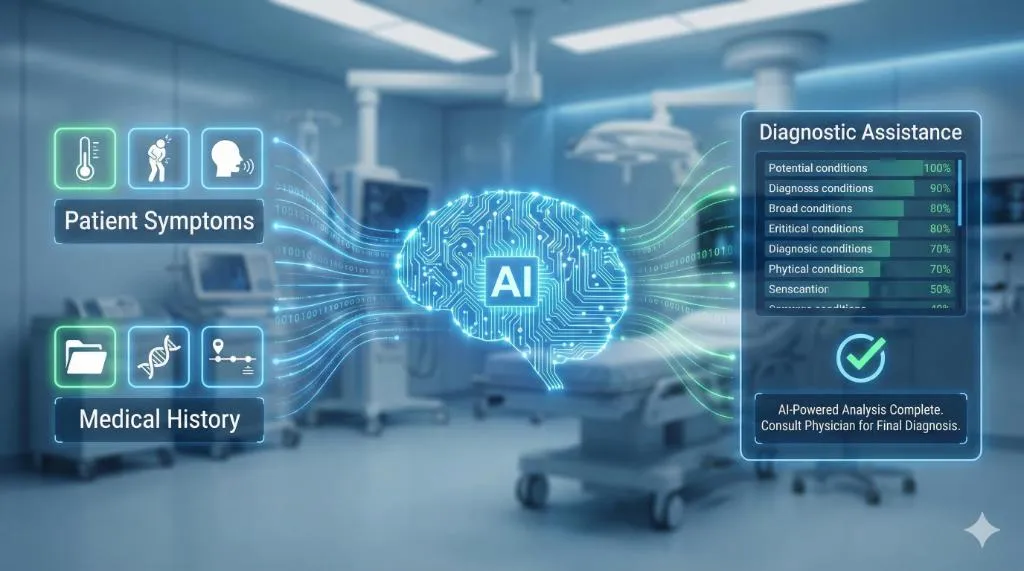
Healthcare organizations are increasingly adopting AI automation to improve patient outcomes and operational efficiency. Administrative tasks such as appointment scheduling, documentation, billing, and patient communication consume significant resources. AI automation helps streamline these processes, allowing healthcare professionals to spend more time on patient care.
AI is also being used for diagnostic support, medical imaging analysis, predictive analytics, and drug discovery. By analyzing large volumes of medical data, AI systems can assist clinicians in making more informed decisions and identifying potential health risks earlier.
Healthcare automation is expected to continue growing as providers seek ways to improve efficiency while addressing increasing demand for medical services.
E-Commerce Automation
Online retailers rely heavily on AI automation to enhance customer experiences and optimize operations. AI-powered recommendation engines analyze browsing and purchasing behavior to suggest products that are most likely to interest individual customers. These personalized recommendations can significantly increase conversion rates and revenue.
AI also helps e-commerce businesses manage inventory, forecast demand, optimize pricing, and automate customer support. By analyzing market trends and customer behavior, AI systems enable retailers to make better decisions and respond more quickly to changing conditions.
E-Commerce Applications
| Area | AI Automation Example |
|---|---|
| Product Recommendations | Personalized suggestions |
| Inventory Management | Demand forecasting |
| Customer Support | AI chatbots |
| Pricing Optimization | Dynamic pricing |
| Fraud Detection | Transaction monitoring |
Best AI Automation Tools in 2026
We test these on real projects, so we’ll point you to our hands-on coverage instead of repeating the marketing. For workflow engines, start with our n8n review and the Zapier vs n8n breakdown, or compare the whole field in our best workflow automation tools roundup. For AI-heavy tasks, see our picks for the best AI content writing tools.
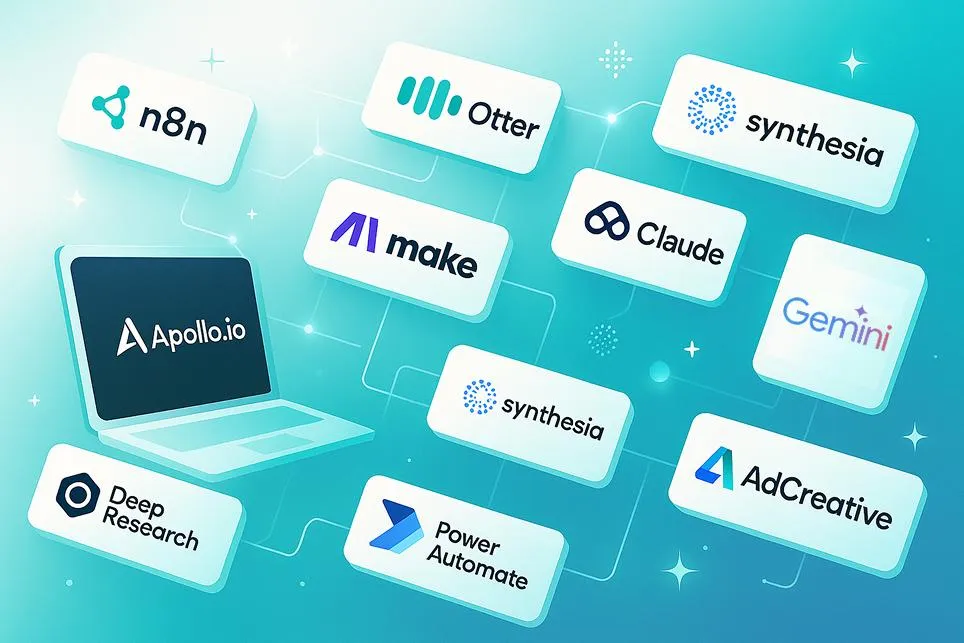
The rapid growth of artificial intelligence has led to the emergence of hundreds of automation tools designed for different business functions. Some tools specialize in content creation, while others focus on workflow automation, customer support, sales, or data analysis. Choosing the right AI automation platform depends on an organization’s goals, budget, technical expertise, and existing technology stack.
In 2026, businesses are increasingly adopting multiple AI tools rather than relying on a single platform. A marketing team might use ChatGPT for content generation, Zapier for workflow automation, HubSpot for customer relationship management, and Google Gemini for research and collaboration. Together, these tools create a comprehensive automation ecosystem that streamlines operations and improves productivity.
One of the biggest trends in AI software is the integration of automation directly into existing business applications. Instead of requiring separate systems, AI capabilities are now embedded into CRM platforms, email marketing tools, productivity suites, and customer support software. This makes automation more accessible and easier to implement across organizations.
Another factor driving adoption is the availability of no-code and low-code platforms. Previously, building automated workflows often required technical expertise and software development resources. Modern AI automation platforms enable non-technical users to create sophisticated workflows using visual interfaces and drag-and-drop tools. This democratization of automation is helping businesses of all sizes take advantage of AI capabilities.
Top AI Automation Tools Comparison
| Tool | Best For | Key Features | Ideal Users |
|---|---|---|---|
| ChatGPT | Content & Productivity | Writing, coding, research, analysis | Marketers, writers, businesses |
| Claude | Long-Form Content | Document analysis, summarization | Researchers, enterprises |
| Gemini | Google Ecosystem | Workspace integration, research | Teams using Google products |
| Microsoft Copilot | Office Automation | Word, Excel, Teams integration | Businesses using Microsoft 365 |
| Zapier | Workflow Automation | 7,000+ integrations | Small businesses, agencies |
| Make | Visual Automation | Advanced workflow builder | Power users |
| n8n | Open-Source Automation | Self-hosted workflows | Developers |
| HubSpot AI | Marketing & CRM | Lead management, campaigns | Sales and marketing teams |
| Salesforce Einstein | Enterprise CRM | Predictive analytics | Large organizations |
| Intercom AI | Customer Support | AI chatbot and helpdesk | SaaS and support teams |
Recommended AI Stack for Small Businesses
Many small businesses assume they need expensive enterprise software to benefit from AI automation. In reality, affordable tools can automate a significant portion of daily operations.
Small Business AI Stack
| Business Function | Recommended Tool |
|---|---|
| Content Creation | ChatGPT |
| Workflow Automation | Zapier |
| Customer Support | Intercom AI |
| CRM | HubSpot |
| Meeting Notes | Fireflies AI |
| Research | Gemini |
| Document Analysis | Claude |
| Team Collaboration | Microsoft Copilot |
This combination allows small businesses to automate content creation, customer interactions, lead management, workflow execution, and internal collaboration without requiring a large technology budget.
How Small Businesses Can Start With AI Automation
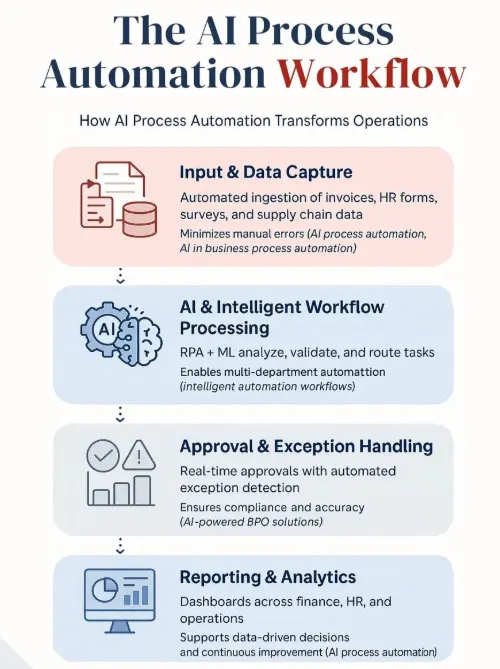
For many business owners, the idea of implementing AI automation can seem overwhelming. However, successful AI adoption rarely begins with large-scale transformation projects. The most effective approach is to start with a single process that consumes significant time and resources.
A good starting point is identifying repetitive tasks performed daily by employees. Common examples include responding to frequently asked customer questions, scheduling appointments, generating reports, entering data, and sending follow-up emails. These activities often provide immediate opportunities for automation.
Once a suitable process has been identified, businesses should establish clear goals. For example, an organization might aim to reduce customer response times, improve lead conversion rates, or decrease administrative workload. Defining measurable objectives makes it easier to evaluate the success of automation initiatives.
After selecting a use case, organizations should choose tools that align with their needs and budget. Many AI platforms offer free plans or trial periods, making it possible to experiment before committing to a long-term investment. Businesses should also ensure that selected tools integrate with existing software systems.
Training employees is another important step. AI automation should be positioned as a productivity enhancement rather than a replacement for human workers. When employees understand how automation can simplify their work and eliminate repetitive tasks, adoption is often more successful.
Finally, organizations should monitor performance and continuously refine their workflows. AI automation is not a one-time project but an ongoing process of improvement and optimization.
Common Challenges and Risks of AI Automation
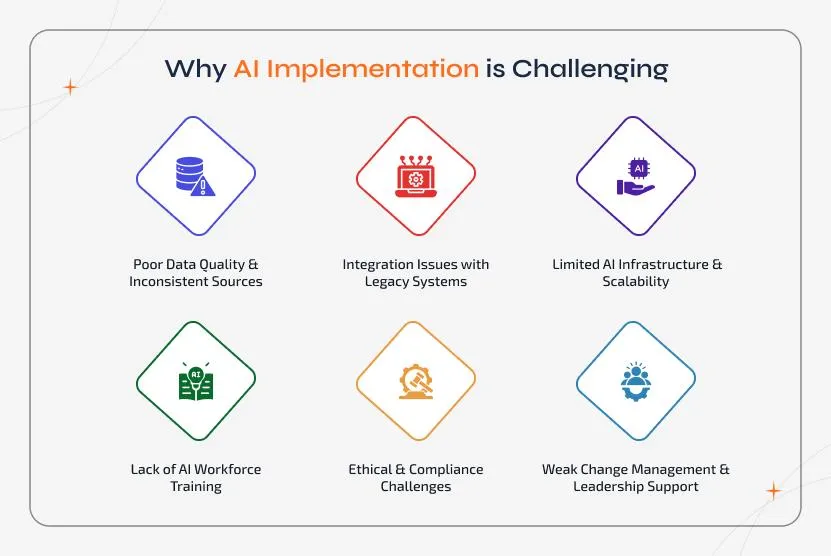
Despite its many advantages, AI automation also presents challenges that organizations must address. Understanding these risks is essential for successful implementation and long-term sustainability.
Data Quality Issues
AI systems rely heavily on data. If the information used to train or operate an AI system is inaccurate, incomplete, or outdated, the resulting outputs may also be unreliable. Poor data quality can reduce the effectiveness of automation and lead to incorrect decisions.
Security and Privacy Concerns
Many AI applications process sensitive customer and business information. Organizations must implement robust security measures to protect data from unauthorized access and cyber threats. Compliance with privacy regulations is also essential.
Employee Resistance
Some employees may view AI automation as a threat to job security. This perception can create resistance and slow adoption. Organizations should emphasize how AI complements human capabilities rather than replacing employees entirely.
Integration Challenges
Businesses often use multiple software platforms that were not originally designed to work together. Integrating AI automation into existing technology environments can require careful planning and technical expertise.
Ethical Considerations
AI systems can unintentionally produce biased or unfair outcomes if they are trained on problematic data. Organizations must ensure transparency, accountability, and fairness when deploying AI-powered solutions.
Challenges and Solutions
| Challenge | Solution |
|---|---|
| Poor Data Quality | Data governance and cleaning |
| Security Risks | Strong cybersecurity practices |
| Employee Resistance | Training and communication |
| Integration Issues | API-based automation tools |
| Ethical Concerns | Responsible AI frameworks |
Future Trends in AI Automation

The future of AI automation is expected to be defined by increasingly intelligent and autonomous systems. While current automation tools focus primarily on assisting humans, future solutions will be capable of independently managing complex workflows and making sophisticated decisions.
AI Agents
One of the most significant trends in 2026 is the rise of AI agents. Unlike traditional automation systems that perform predefined tasks, AI agents can plan, reason, and execute multi-step objectives. For example, an AI agent could research competitors, analyze market trends, generate a report, create a presentation, and email the results without human intervention.
Hyperautomation
Hyperautomation refers to the combination of AI, robotic process automation, machine learning, and analytics to automate entire business processes from start to finish. Organizations are increasingly pursuing hyperautomation strategies to eliminate manual work across departments.
Multimodal AI
Future AI systems will process multiple forms of information simultaneously, including text, images, video, audio, and structured data. This will enable more comprehensive analysis and more powerful automation capabilities.
Human-AI Collaboration
Rather than replacing workers, AI will increasingly function as a digital coworker. Employees will collaborate with AI systems to solve problems, generate ideas, analyze information, and make decisions. This partnership between humans and machines is expected to drive significant productivity gains.
Industry-Specific AI Solutions
As AI technology matures, more specialized solutions will emerge for industries such as healthcare, finance, education, manufacturing, and logistics. These tools will be designed to address industry-specific challenges and requirements.
Future Trends Summary
| Trend | Expected Impact |
|---|---|
| AI Agents | Autonomous task completion |
| Hyperautomation | End-to-end workflow automation |
| Multimodal AI | Better understanding of information |
| Human-AI Collaboration | Increased productivity |
| Industry-Specific AI | Specialized business solutions |
FAQs
Is AI automation the same as artificial intelligence?
No. Artificial intelligence is the broader field of creating intelligent systems, while AI automation refers specifically to using AI technologies to automate tasks and workflows.
Can small businesses use AI automation?
Yes. Modern AI tools are affordable and accessible, making automation achievable even for small businesses with limited budgets.
What industries benefit most from AI automation?
Healthcare, finance, retail, marketing, customer service, manufacturing, logistics, education, and human resources are among the industries benefiting most from AI automation.
Will AI automation replace jobs?
AI automation primarily replaces repetitive tasks rather than entire jobs. In most cases, AI augments human capabilities and enables employees to focus on higher-value activities.
What is the biggest benefit of AI automation?
While benefits vary by organization, increased productivity and efficiency are often the most significant advantages.
How much does AI automation cost?
Costs vary widely depending on the tools and scale of implementation. Many small businesses begin with low-cost or free AI tools before expanding their automation efforts.
Conclusion
AI automation has evolved from a niche technology into a fundamental component of modern business strategy. By combining artificial intelligence with automated workflows, organizations can streamline operations, improve decision-making, reduce costs, and deliver superior customer experiences. From marketing and sales to healthcare and finance, AI automation is transforming how work is performed across industries.
The technology is becoming increasingly accessible, enabling businesses of all sizes to benefit from intelligent automation. Small organizations can automate routine tasks using affordable tools, while large enterprises can deploy sophisticated AI systems to optimize complex operations. As AI capabilities continue to advance, the opportunities for automation will expand even further.
Organizations that embrace AI automation today are positioning themselves for long-term success. They can operate more efficiently, respond more quickly to market changes, and create better experiences for both customers and employees. Whether you are a business owner, marketer, developer, manager, or entrepreneur, understanding AI automation is becoming an essential skill in the digital economy.
The future of work will not be defined by humans competing against AI. Instead, it will be shaped by humans and AI working together to achieve outcomes that neither could accomplish alone. Those who learn how to leverage AI automation effectively will be best prepared to thrive in the years ahead.