

Most people shopping for event management software don’t need it. They need a spreadsheet and a check-in app.
The moment you’re taking money, running a waitlist or reporting on ROI, that changes fast.
Here’s what each platform really costs, which ones refuse to publish a price, and the two that quietly changed name or shut down since this list first ran. For paid ticketing specifically, our guide to event booking software goes deeper on registration and ticketing.
The short answer
Eventbrite for anything public and ticketed, because it costs nothing until somebody buys. Cvent or Bizzabo once you’re running a real conference with sponsors and a virtual audience. Tripleseat if you are the venue rather than the organiser. And monday.com if what you actually need is to plan the event, not sell it.
Quick verdict
- Best for most events Eventbrite, free until you sell a ticket
- Best for big conferences Cvent, quote only
- Best for venues and restaurants Tripleseat
- Best for planning the event itself monday.com, from $9/seat/mo
- Fees and prices checked on vendor pages in July 2026
- We flag the tools that have shut down or changed name since this list was written
- Split by the job you are doing, not by contract size
- Most enterprise platforms here refuse to publish a price, so expect a sales call
If you are selling tickets to the public, start with Eventbrite and do not overthink it. Enterprise platforms only make sense once a sales team is measured on the event.
| Feature | ||||
|---|---|---|---|---|
| Free to start | Yes | No | No | Yes |
| Entry cost | $0 for free events(winner for this row) | Custom quote | Custom quote | $9/seat/mo |
| Publishes its prices | Yes(winner for this row) | No | No | Yes |
| How you pay | 3.7% + $1.79 per ticket, plus 2.9% processing | Annual contract | Annual contract | Per seat, per month |
| Built-in ticketing | Yes | Yes | No | No |
| Onsite check-in app | Yes | Yes | No | No |
| Virtual and hybrid events | No | Yes(winner for this row) | No | No |
We may earn a commission when you buy through links on this page. This does not affect our reviews.
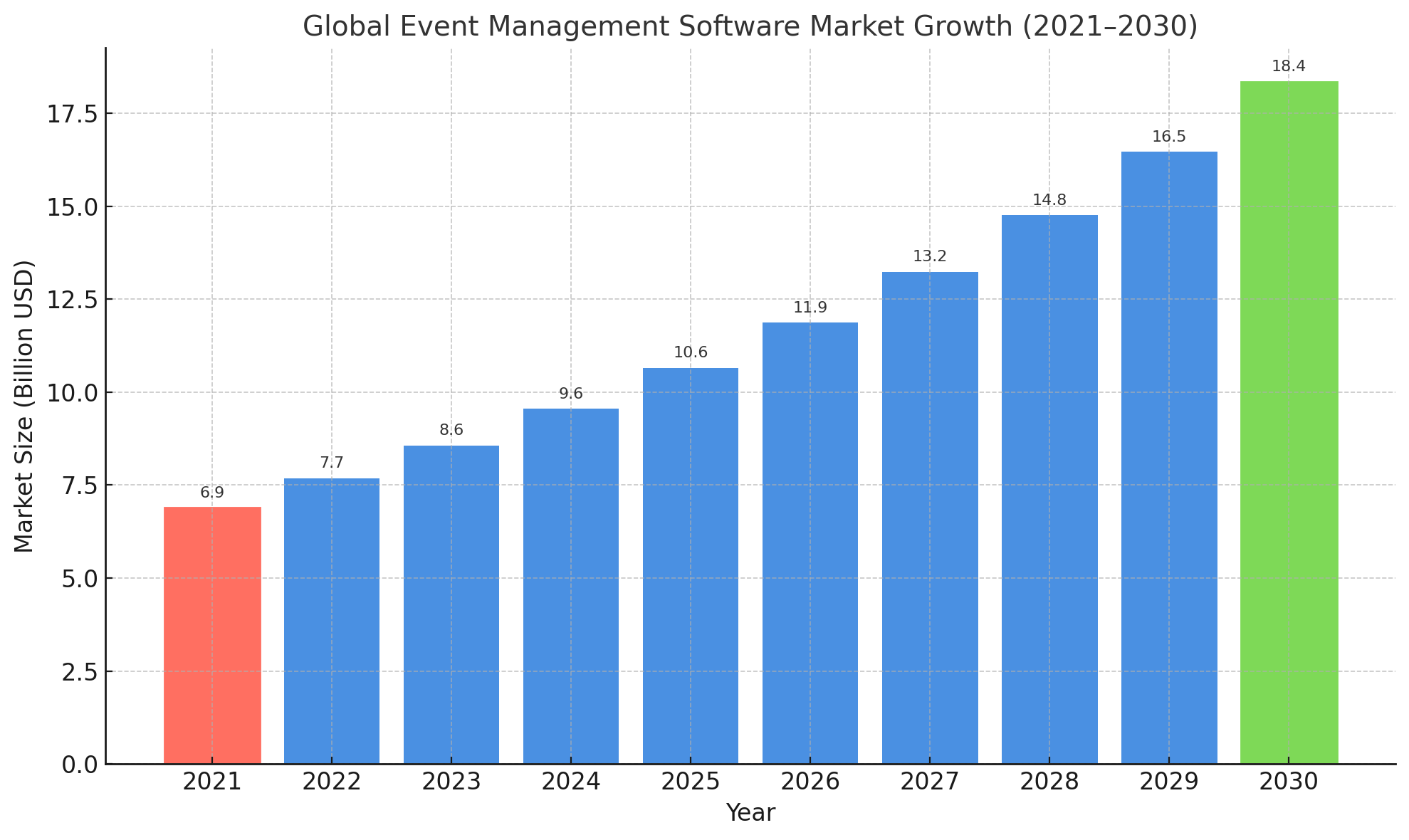
How we judged them. We scored each platform against the same brief on paper: a 200-person paid conference with two ticket tiers, a discount code, an onsite check-in and a post-event report. We noted where a sales call is compulsory, what the free tier really allows, and how attendee data gets out. This is a research-led roundup built on vendor documentation and pricing pages checked in July 2026, not a hands-on deployment of every platform. Grand View Research puts this market on an 11.5% compound growth rate through 2030, which is why the category churns so hard and why two entries below no longer exist as you knew them.
What separates these platforms
Feature lists in this category all look identical. Four things actually differ.
- How you pay. Per ticket, per seat, or an annual contract. Eventbrite takes a cut of each sale and nothing else. Cvent wants a year up front. For a small event those two models are separated by thousands of dollars.
- Who the tool is built for. Tripleseat serves the venue selling the room. Eventbrite serves the organiser filling it. Buying the wrong side of that line is the most common mistake we see.
- Onsite versus online. QR check-in, badge printing and a door queue that moves is a different engineering problem to streaming and virtual networking. Very few platforms are strong at both.
- Where the data lands. Registration data is only useful if it reaches your CRM and your mailing list. Check the integration list before the feature list.
Best event management software in 2026
Eventbrite, the default for public events
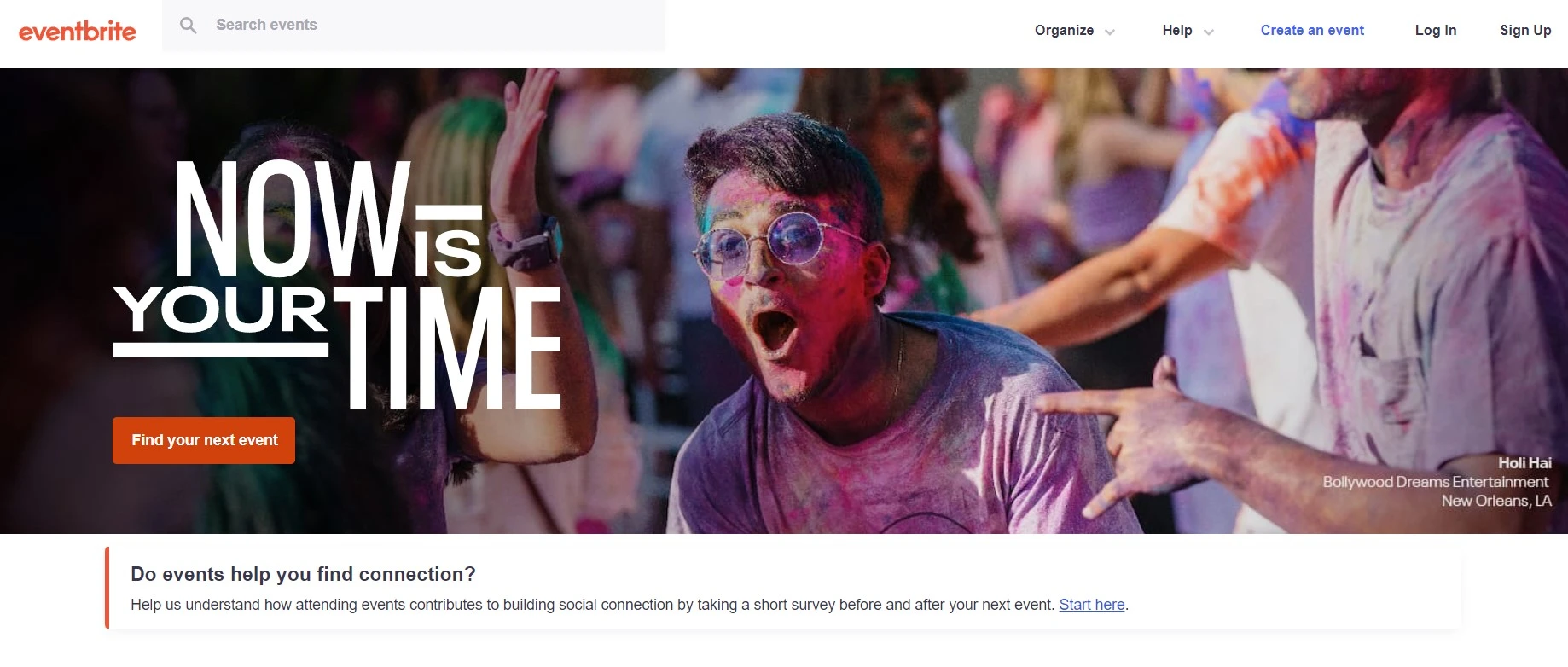
Eventbrite wins on a simple point: free events cost you nothing, and paid events cost you nothing until a ticket sells. No contract, no demo call, no annual commitment. Add to that a genuine discovery audience browsing the platform, and for a workshop, a meetup or a local gig it’s hard to justify anything else.
The fees do bite at volume. On a $60 ticket you’re looking at roughly $6 gone between service and processing fees, which is fine for 200 tickets and painful for 5,000. Eventbrite has also pulled back from virtual events, so don’t assume it covers hybrid. If the fee model bothers you, our Eventzilla review looks at a cheaper alternative.
Key features: free ticketing for free events, event discovery and social promotion, payment processing, organiser app for door check-in, attendee analytics.
Pricing: free for free events. Paid tickets carry a 3.7% + $1.79 service fee per ticket plus 2.9% payment processing per order, passed to the buyer by default. A Pro plan with email marketing starts around $15 a month.
Best for: public, ticketed, in-person events under a few thousand attendees.
Not ideal for: high-volume ticketing where the percentage becomes real money, and anything virtual.
Cvent for conferences with a budget line
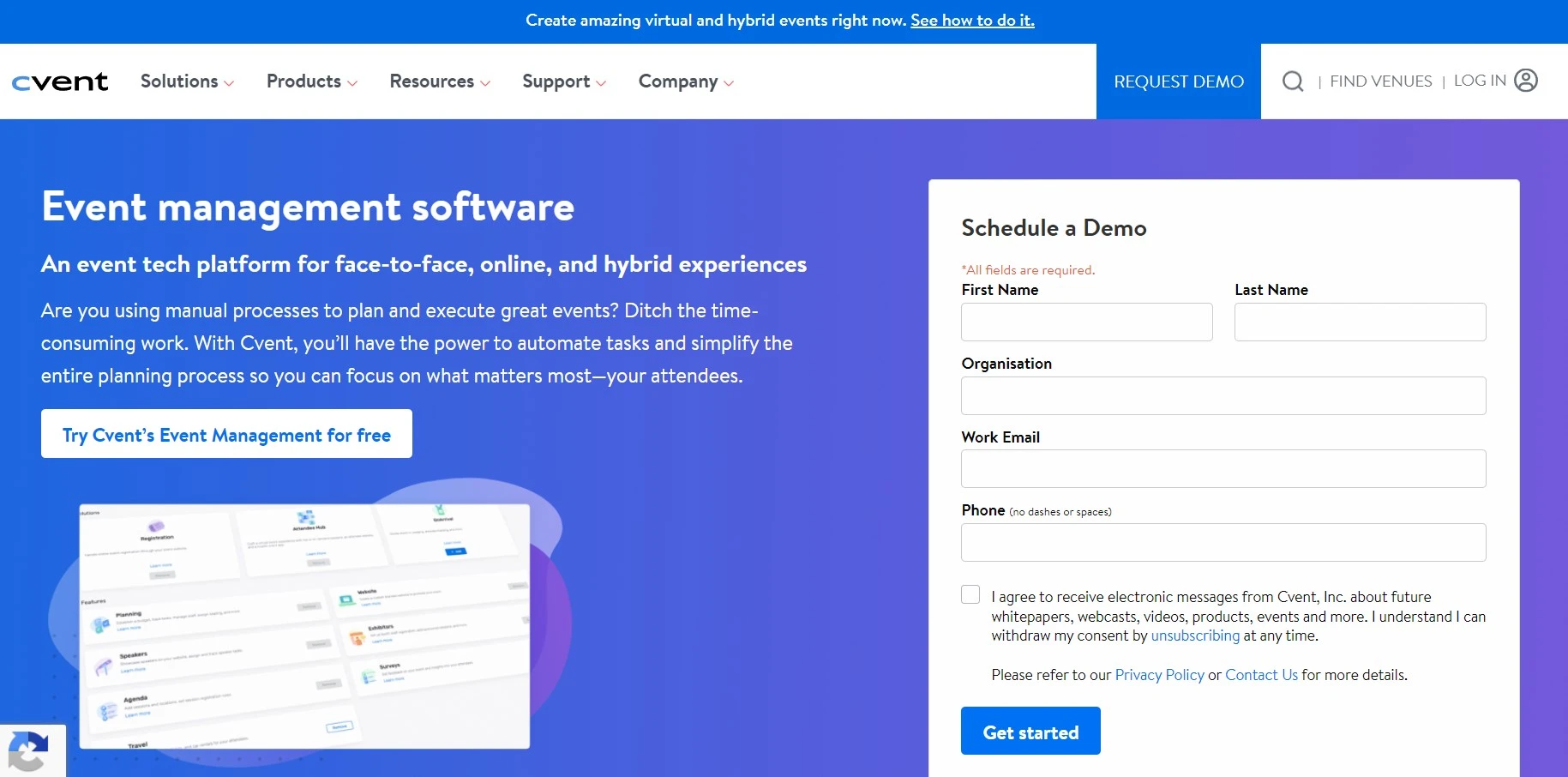
Cvent is the heavyweight, and it earns that in breadth: venue sourcing, registration, event marketing, badge printing, mobile apps, virtual sessions, exhibitor management and reporting that a finance team will accept. It has also been buying its competition for years, which is why so much of this category now sits under one roof.
The honest catch is the commitment. There’s no public price, no self-serve signup and no month-to-month. You’ll do a demo, a scoping call and an annual contract, and the platform is heavy enough that somebody on your team needs to own it. Overkill for anything under a few hundred attendees.
Key features: registration management, venue sourcing marketplace, budget tracking, onsite check-in and badging, event marketing automation, attendee analytics.
Pricing: custom quote only, annual contract. Expect a five-figure conversation for a full conference deployment.
Best for: enterprises, associations and multi-day conferences with sponsors.
Not ideal for: anyone who wants to sign up and start this afternoon.
Bizzabo when the event is a marketing channel
Bizzabo is Cvent’s closest rival and the better pick if your event exists to generate pipeline. The attendee-facing experience is noticeably more modern, virtual and hybrid are first-class rather than bolted on, and the analytics are built around sponsor value and lead attribution rather than headcount.
Same catch as Cvent: quote-only, annual contract, and a platform that assumes a dedicated events team. It’s also narrower on venue sourcing, so hotel and room-block work is weaker.
Key features: virtual and hybrid delivery, attendee networking and matchmaking, real-time performance dashboards, sponsor and exhibitor tools, deep custom branding.
Pricing: custom quote only. Sold as an annual platform subscription.
Best for: B2B marketing teams measuring events on pipeline.
Not ideal for: venue-side operations and small internal events.
Tripleseat if you own the room
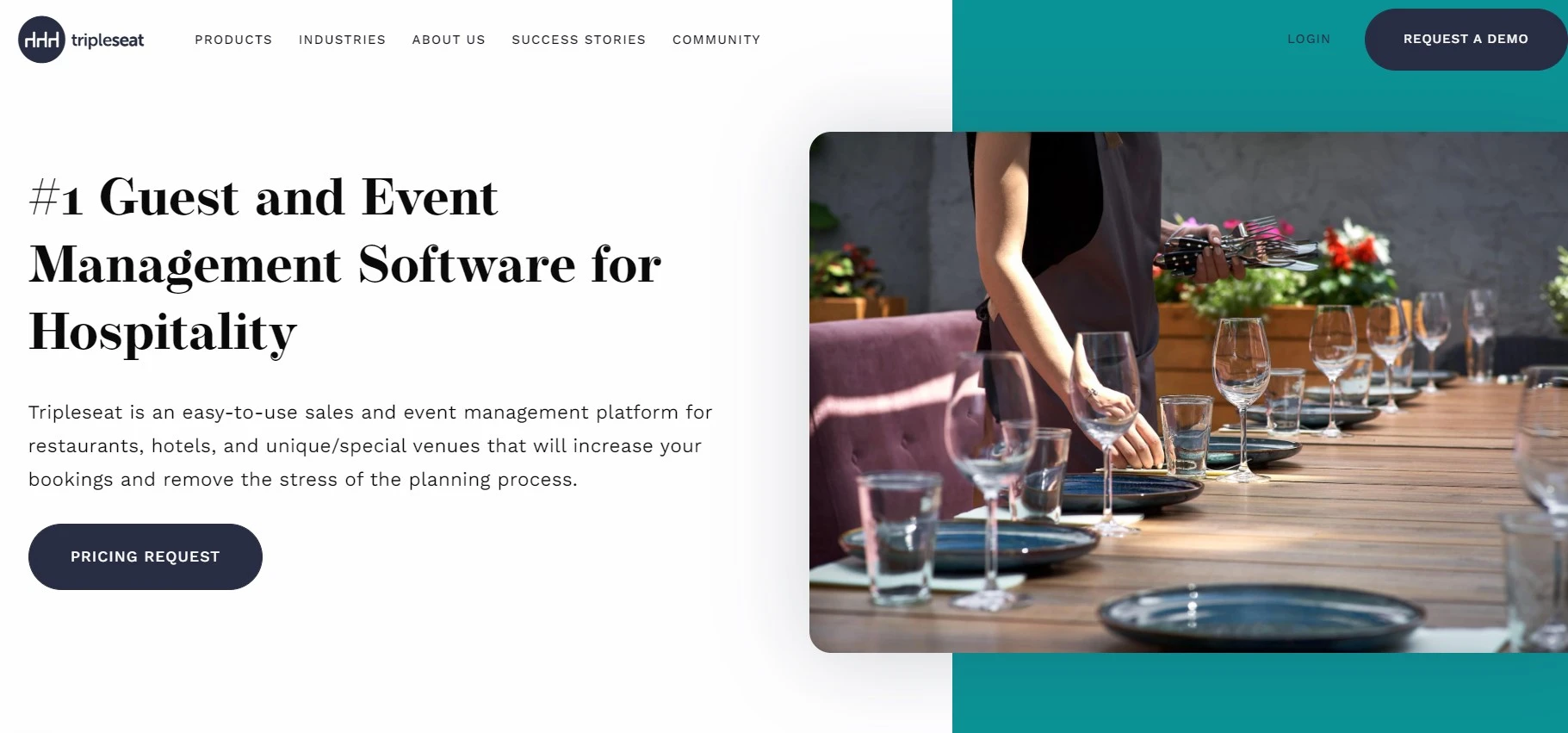
Tripleseat sits on the other side of the transaction. It’s a sales CRM for restaurants, hotels and venues: inbound enquiry lands, becomes a lead, becomes a proposal, becomes a banquet event order and a signed contract, all in one thread. If you sell private dining or function space, this is the category leader and nothing else is close.
It will do nothing for you if you’re the person organising the event rather than hosting it. Pricing is also quote-only now, so the old public figure you’ll find on comparison sites is not something to budget against.
Key features: event booking CRM, lead capture and conversion tracking, BEO and proposal templates, calendar and floor-plan integration, venue-level reporting.
Pricing: tiered by venue count and users, quoted by sales. No public price list.
Best for: restaurants, hotels and event venues selling space.
Not ideal for: event organisers. Wrong side of the table.
Regpack for complicated registration
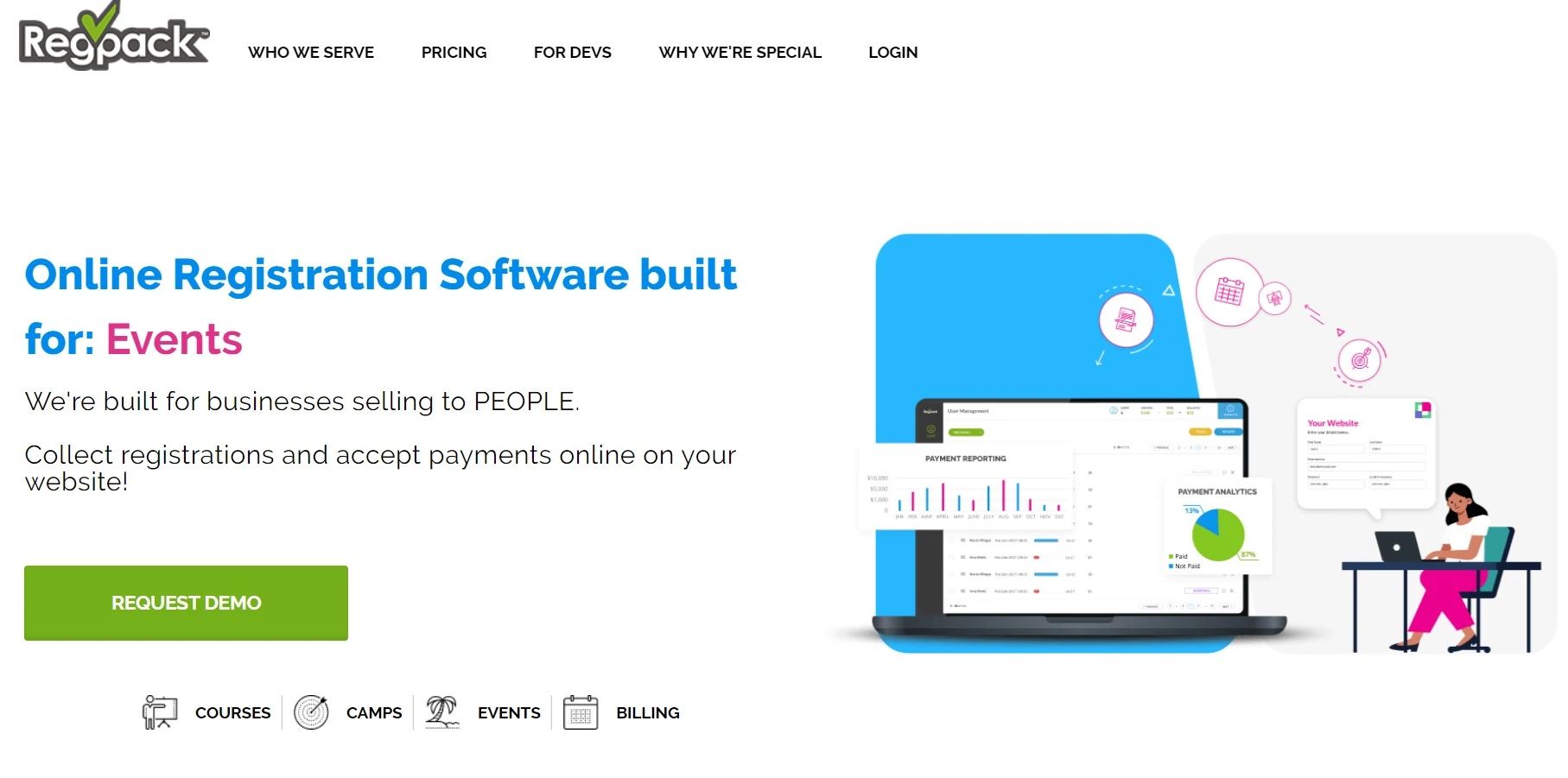
Regpack’s speciality is conditional logic. Registrations that branch by age, group, session choice or membership status, with payment plans and instalments attached, are genuinely hard elsewhere and straightforward here. Camps, training programmes and multi-session workshops are where it shines.
The form builder shows its age and there’s a real learning curve for the first setup. Pricing is calculator-based rather than published, though payment processing is quoted as low as 1.5%, which is better than most.
Key features: conditional registration flows, group and family registration, instalment payments, automated email triggers, unlimited projects and forms on every plan.
Pricing: three annual tiers quoted through their pricing calculator. Payment processing from 1.5%.
Best for: camps, courses and any registration with branching rules and instalments.
Not ideal for: a simple one-ticket event, where you’re paying for logic you won’t use.
monday.com for the planning, not the ticketing
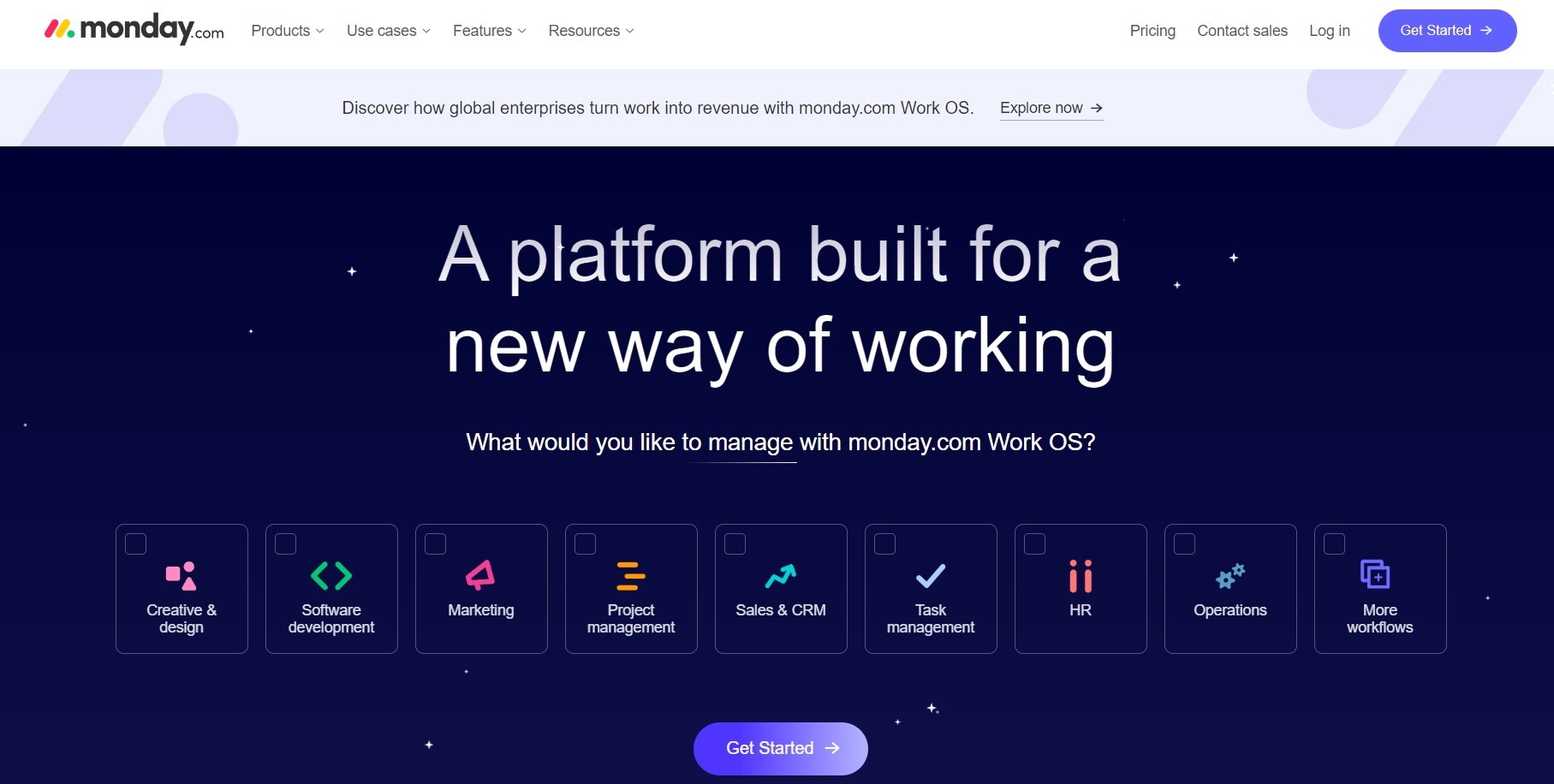
monday.com isn’t event software and shouldn’t be sold as it. What it is: the best place to run the twelve weeks of work before the doors open. Vendor deadlines, run-of-show, budget tracking, who is chasing the caterer, all on one board with automations doing the nagging.
Pair it with Eventbrite for the ticketing and you’ve covered most small-team events for under $50 a month. It’s the pattern we’d actually recommend to a small business. Our project management tools roundup covers the alternatives if monday isn’t your style.
Key features: visual task boards, timeline and Gantt views, automation rules, budget columns, file sharing and guest access for vendors.
Pricing: free for up to 2 seats and 3 boards. Basic $9 per seat per month billed annually, Standard $12, Pro $19, Enterprise quoted. Annual billing saves around 18%.
Best for: internal coordination and the production side of any event.
Not ideal for: registration, ticketing or attendee-facing anything.
Stova, which used to be Aventri
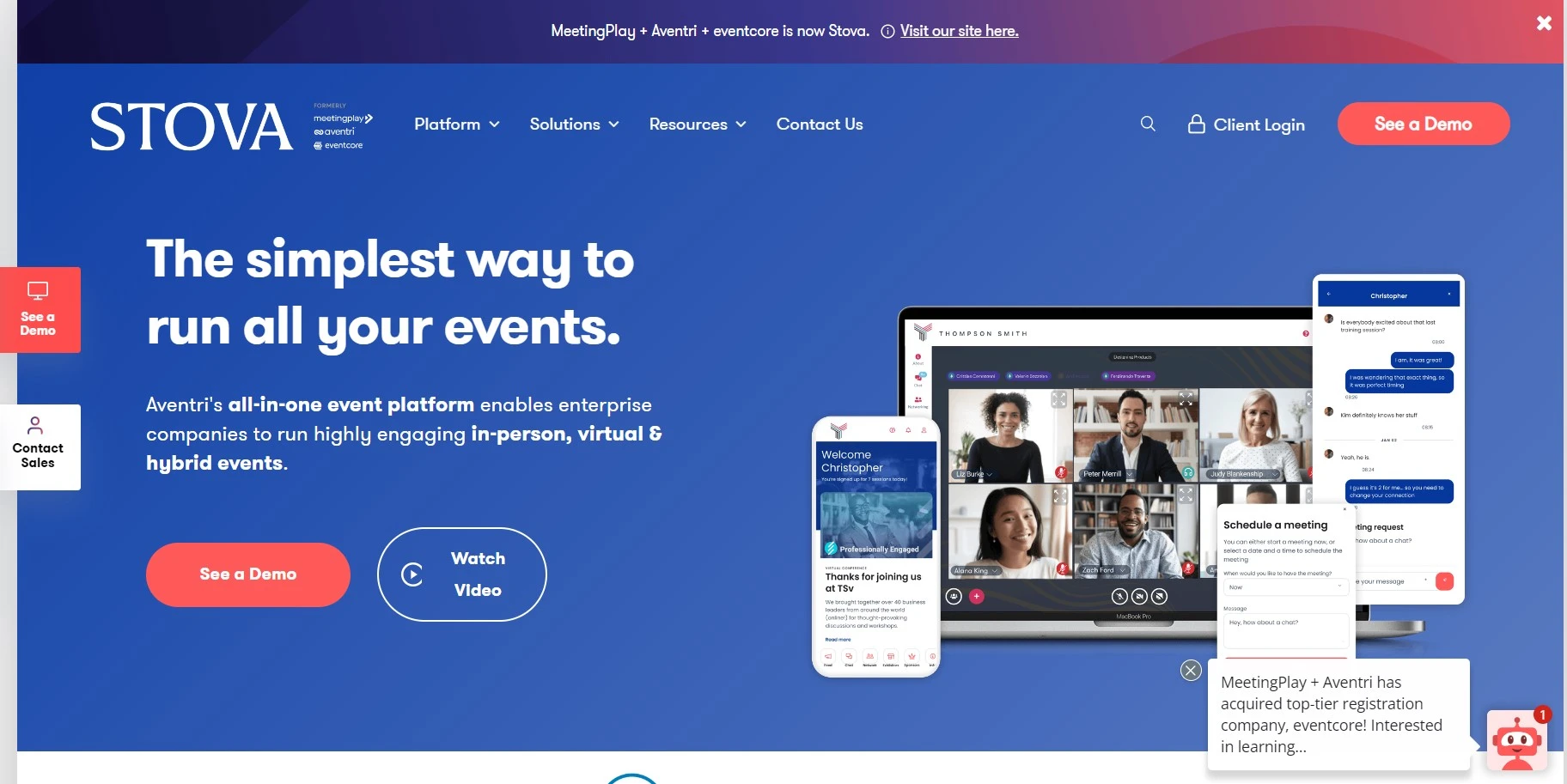
If you came looking for Aventri, this is where it went. Aventri merged with MeetingPlay in 2022, the group picked up Eventcore, and the whole thing rebranded as Stova in October that year. The screenshot below is the old Aventri site.
The platform itself is alive and aimed squarely at Cvent: venue sourcing, registration, onsite badging, virtual delivery and analytics across a global event programme. It’s a credible enterprise alternative, and the smart-badge onsite hardware is better than most. Pricing, inevitably, is a sales conversation.
Key features: venue sourcing, mobile event apps and smart badges, attendee engagement tracking, surveys and reporting, multi-language support.
Pricing: custom quote only.
Best for: global corporate event programmes wanting an alternative to Cvent.
Not ideal for: anyone still searching for the Aventri brand and expecting the old pricing.
Social Tables, now Cvent Event Diagramming
Another name change worth knowing. Cvent bought Social Tables for $100 million back in 2018 and the product now ships as Cvent Event Diagramming. It’s still the best to-scale floor planning and seating tool in the business, and it’s still where Cvent is migrating customers from other acquisitions.
What’s gone is the standalone free tier and the standalone price. It’s a Cvent module now, which means a quote. If you only need seating charts, that’s a lot of platform to buy.
Key features: drag-and-drop to-scale floor plans, guest list and seating management, 3D walkthroughs for clients, collaboration with venues and vendors, real-time updates.
Pricing: quoted as part of Cvent. The old standalone Social Tables pricing no longer applies.
Best for: venues and planners who live in seating charts.
Not ideal for: anyone wanting a cheap standalone diagramming tool.
Member Solutions for clubs and studios

Member Solutions is a niche pick and honest about it. Built for martial arts schools, gyms and membership clubs, it handles recurring billing, member registration, liability waivers and the small events those businesses run: gradings, tournaments, open days. It’s been going since 1991 and was acquired by Jonas Software in 2023, which is a good sign for longevity.
As general event software it’s the wrong tool. If you don’t have members, skip it.
Key features: membership billing and collections, online booking and scheduling, waiver and form templates, member CRM and email marketing, event registration for member events.
Pricing: quoted, with billing services priced separately from the software. Confirm both figures before signing.
Best for: gyms, dojos and membership organisations running member events.
Not ideal for: public conferences and ticketed events.
EventEngage has shut down
We recommended EventEngage in earlier versions of this list. It’s gone. The company, founded in 2019, is no longer operating, even though its profile is still cheerfully listed with pricing on several software directories. That’s worth knowing if you’re comparing lists elsewhere and see it recommended.
If EventEngage was on your shortlist for branded event pages plus a mobile app, Bizzabo is the closest replacement at the top end and Eventbrite plus a simple event site does the job at the bottom.
Mistakes that cost organisers money
- Buying an enterprise platform for a 60-person event. The annual contract will cost more than the event. Eventbrite plus a project board covers it.
- Absorbing ticket fees without doing the maths. On a $60 ticket that’s about $6 per sale. Decide deliberately whether the buyer pays it.
- Ignoring the exit. Ask for a sample data export during the trial. Registration lists travel; engagement history usually doesn’t.
- Letting attendee data die in the platform. Connect it to your mailing list and your marketing stack on day one, or next year’s event starts from zero again.
Frequently asked questions
What does Eventbrite actually cost the organiser?
Nothing for a free event. On a paid ticket Eventbrite charges 3.7% plus $1.79 per ticket, with a 2.9% payment processing fee per order on top. By default those fees are added to the buyer price, so you can pass them on or absorb them. There is also a Pro plan from around $15 a month that adds email marketing.
Why will these companies not publish their prices?
Because pricing is built around your event size, attendee count and contract length, and because a sales conversation converts better than a price tag. Cvent, Bizzabo, Tripleseat, Stova and Whova all work this way. Expect a demo, a discovery call and an annual contract. Budget several thousand dollars a year at the low end for a real enterprise platform.
What happened to Aventri?
Aventri merged with MeetingPlay in 2022, the combined company acquired Eventcore, and all three rebranded as Stova in October 2022. The platform still exists and existing Aventri accounts moved across. If you were searching for Aventri, Stova is what you want.
Is Social Tables still a separate product?
No. Cvent bought Social Tables in a $100 million deal in 2018 and it now ships as Cvent Event Diagramming. The socialtables.com site still exists and the diagramming tool is very much alive, but you buy it from Cvent and pricing runs through their sales team.
Do I need event software, or will a spreadsheet do?
For a one-off internal workshop with 30 people, a spreadsheet and a calendar invite are genuinely fine. You need a platform the moment you are taking money, handling a waitlist, checking people in at a door, or reporting to someone about ROI. Paying for registration software to run a team offsite is a common waste.
Which platform handles virtual and hybrid events best?
Cvent and Bizzabo, and it is not close. Both run streaming, virtual networking, session tracking and unified analytics across in-person and remote attendees in one place. Eventbrite has largely stepped back from virtual events, so do not assume it still covers that.
Can I move my attendee data if I switch platforms?
Usually, but check the export options before you sign. Every platform here exports registrations to CSV. What often does not travel is engagement history, session attendance and anything built inside a proprietary event app. Ask for a sample export during the trial rather than after you have paid for a year.
Our verdict
For most readers the answer is Eventbrite plus a project board, and that combination costs under $50 a month. Running a multi-day conference with sponsors and a virtual audience? Cvent or Bizzabo, and accept the sales call. If you’re the venue rather than the organiser, Tripleseat is the only real choice in event management software built for your side of the deal.
One warning. Never sign an annual contract before you’ve seen a full data export, because the attendee list is the only asset the event leaves behind.
Next step: write down your attendee count, whether you’re charging, and whether anyone attends remotely. Those three answers pick the platform for you faster than any demo will.