

MasterClass sells you the person, not the syllabus. Gordon Ramsay in his own kitchen, Chris Voss walking through a real hostage negotiation, Margaret Atwood on why your first draft is supposed to be bad.
That’s a genuinely different product from a course marketplace, and it’s why people either love it or feel cheated. The best MasterClass courses teach a craft properly. The weak ones are a nice documentary.
Here are the 21 worth your subscription, sorted by category, with an honest note on who each one is not for. Still comparing platforms? Our roundup of online learning platforms covers the alternatives.
Quick answer
If you only take three
- Best class on the platform Chris Voss, The Art of Negotiation Immediately usable at work, in a salary conversation, or buying a car. The one class that pays for the subscription on its own.
- Best taught Tom Morello, Electric Guitar Morello has actually taught guitar for years, and it shows. Real drills, real assignments, measurable progress.
- Best value for a hobby Gordon Ramsay, Cooking Two full parts, technique-first rather than recipe-first, and the skills transfer to everything you cook afterwards.
- What it costs $120 to $240 a year Annual billing only, all classes included on every tier. Tiers differ on devices and offline downloads, not content.
- Production quality nothing else in online learning matches
- Every class included on every tier, so browsing costs nothing extra
- Workbooks and assignments on the stronger classes
- No certificate, no accreditation, no instructor feedback
- Weaker classes are inspiration rather than instruction
- Annual billing only, and it auto-renews
Worth it if you will actually finish three or four classes in a year. If you want a credential or a career change, spend the money on Coursera instead.
What MasterClass actually costs
MasterClass membership
Checked July 2026
- Included: Access to every class
- Included: 1 device at a time
- Not included: Offline downloads
- Included: Access to every class
- Included: 2 devices at a time
- Included: Offline downloads
- Included: Access to every class
- Included: 6 devices at a time
- Included: Offline downloads
All three tiers unlock the entire catalogue. The only differences are how many devices can stream at once and whether you can download classes for offline viewing. Billing is annual only, paid upfront, and there is a 30-day money-back guarantee.
We may earn a commission when you buy through links on this page. This does not affect our reviews.
Our take: Plus at $180 is the one to buy. Offline downloads are the difference between finishing a class on a commute and never opening it again, and Standard doesn’t have them. Premium only makes sense if several people in the house will genuinely use it.
One warning that costs people money every year: MasterClass bills annually and renews automatically. Set a calendar reminder for eleven months from today.
Best Popular Masterclass Courses in 2026
Grouped by category so you can jump straight to yours. Lesson counts and runtimes shift as classes are re-cut, and MasterClass does occasionally retire a class, so check it is still listed before you subscribe for one specific instructor.
Food and cooking
Gordon Ramsay teaches Cooking (Parts I and II)
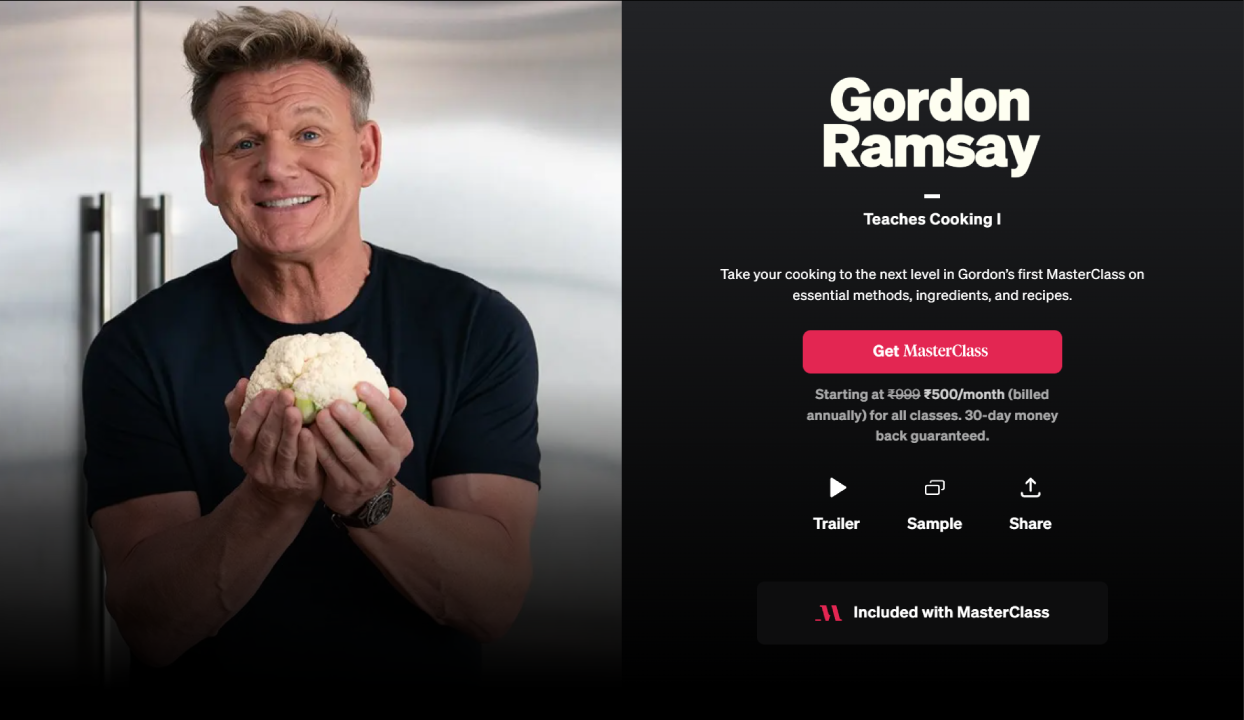
Two full classes and the strongest hobby-cook pick on the platform. Ramsay teaches technique before recipes: knife work, seasoning, building flavour from cheap ingredients, and how to actually taste as you go. Part I is fundamentals, Part II is dishes to cook for other people. The intensity is real but the teaching is patient, which surprises people who only know him from television.
Best for: anyone who can cook a few things and wants to understand why they work. Skip it if you want a recipe collection rather than a skills course.
Thomas Keller teaches Cooking Techniques
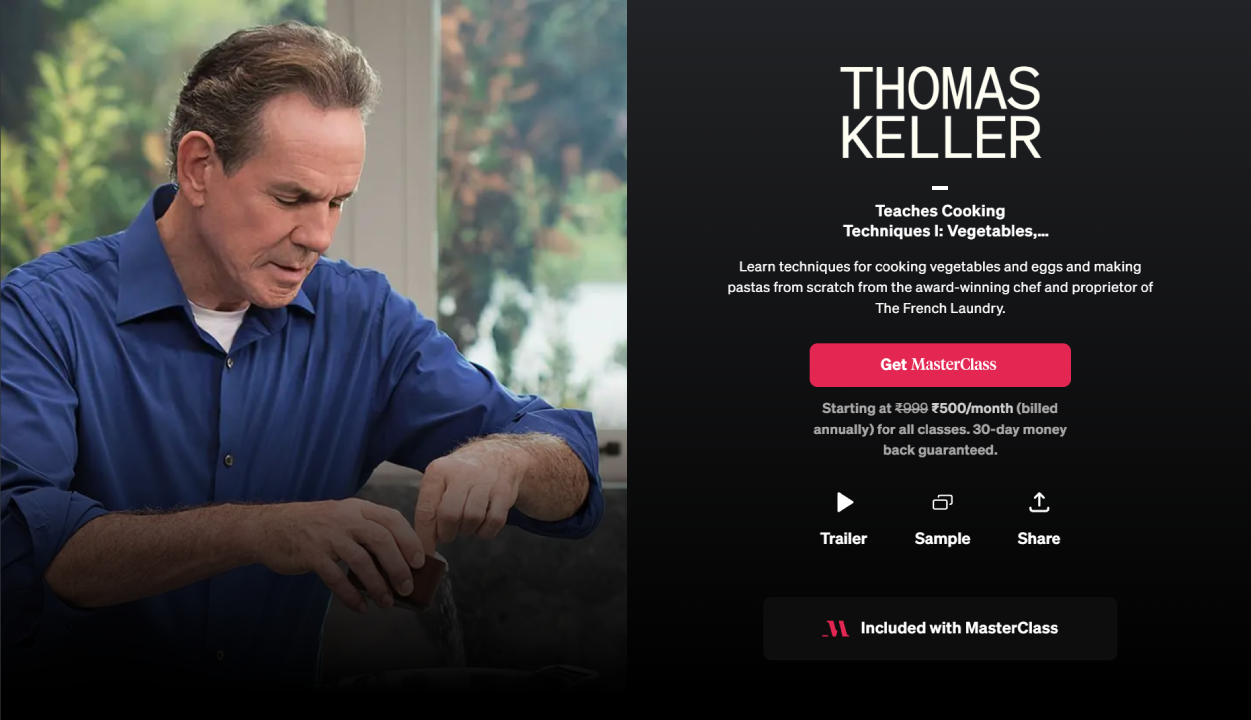
Three parts and by far the most thorough cooking instruction on MasterClass. Keller works through vegetables, eggs and pasta, then stocks, sauces and meat, then fish, sous vide and dessert. It is slower and more technical than Ramsay’s, and the payoff is that your fundamentals genuinely improve. This is the closest thing here to culinary school.
Best for: serious home cooks with patience. Skip it if you want quick wins, because the first hour is about blanching vegetables.
Design and personal style
Bobbi Brown teaches Makeup and Beauty
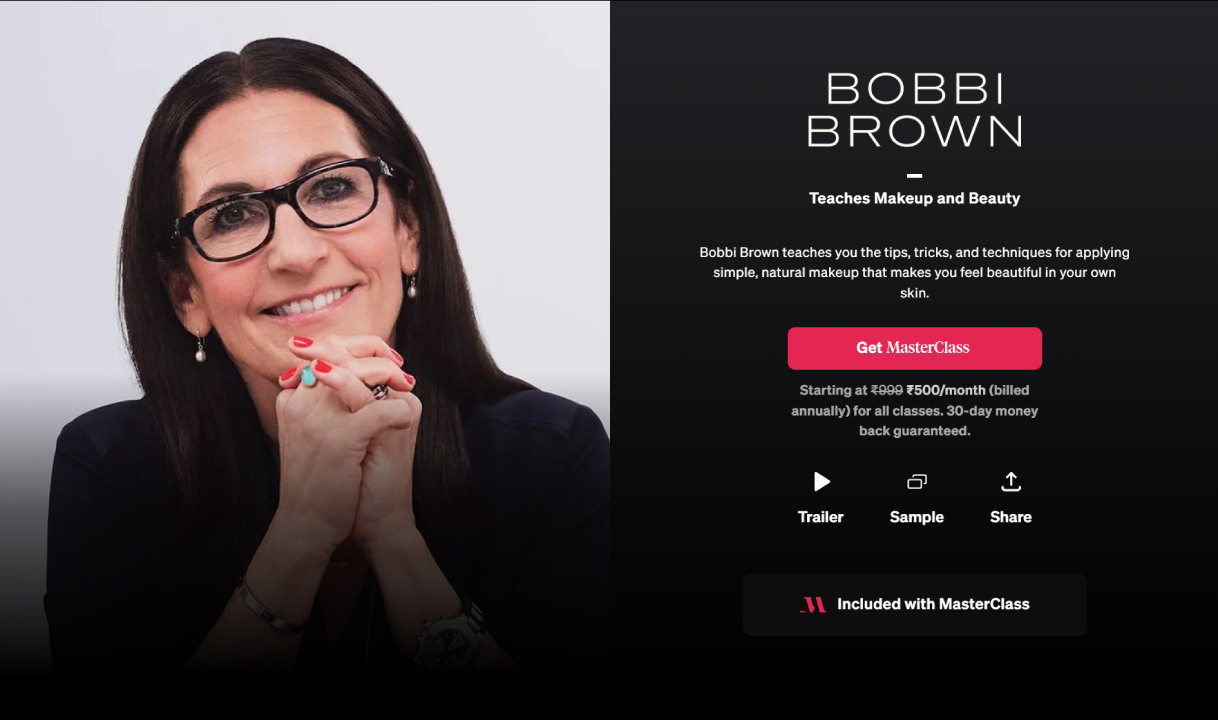
Forty years of professional makeup artistry compressed into a class that is refreshingly anti-hype. Brown’s whole argument is that most people are overdoing it, and she demonstrates on a range of faces rather than one model. The practical sections on day, evening and on-camera looks are the useful ones. The business advice at the end is thinner.
Best for: people who want to look like themselves on a good day. Skip it if you are after editorial or special-effects technique.
Tan France teaches Style for Everyone
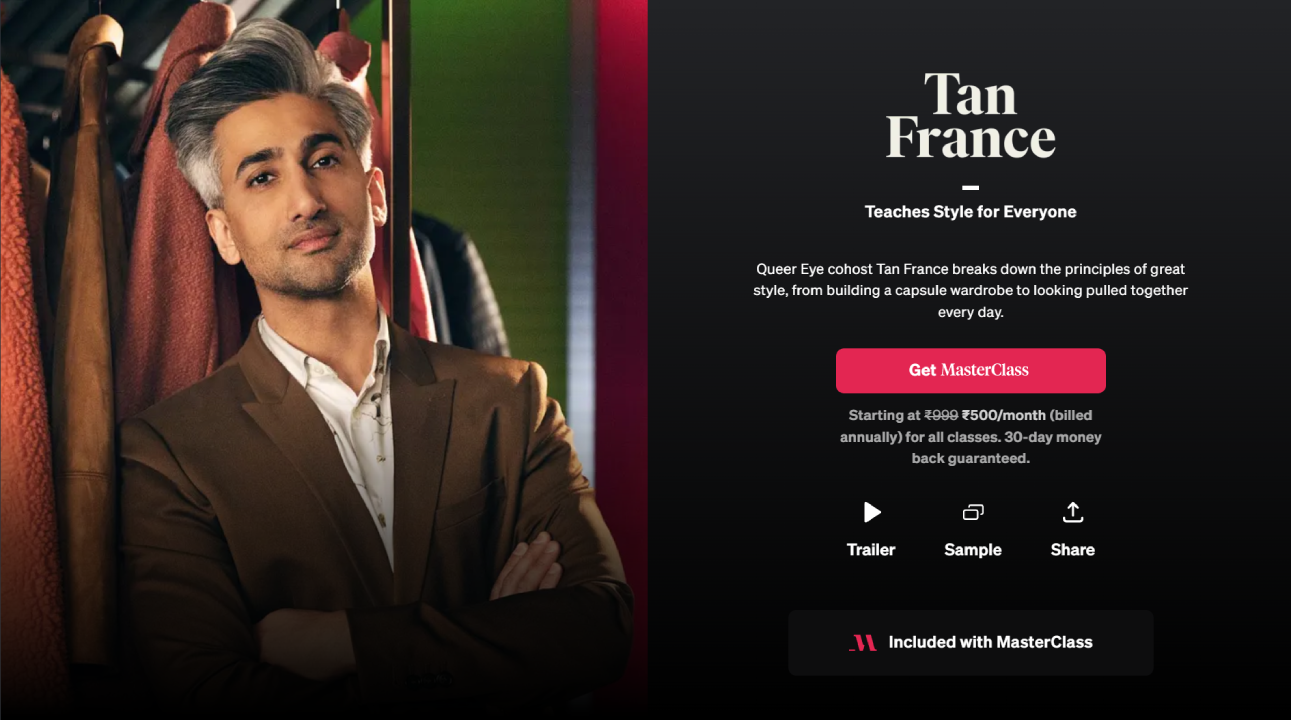
Short, warm and more practical than expected. France works through proportion, colour, fabric and building a wardrobe you actually wear, and he is genuinely good at explaining why an outfit fails. It will not turn you into a stylist. It will stop you buying clothes that sit in the wardrobe unworn, which is a better return.
Best for: anyone rebuilding a wardrobe or dressing for a new job. Skip it if you already have a settled personal style.
Film and directing
James Cameron teaches Filmmaking
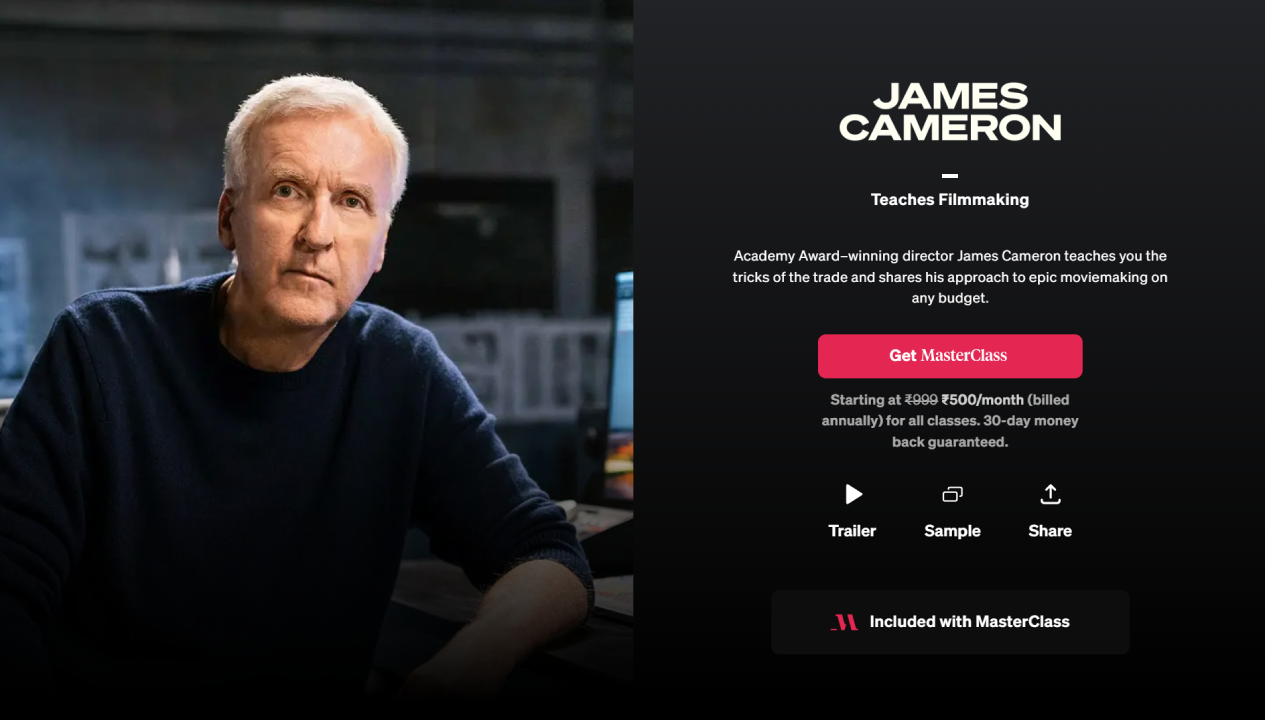
Cameron on story development, tension, working within a budget and when to break the rules. It is fascinating and it is also very much a class about how James Cameron makes films, which involves resources you do not have. Take the storytelling and structure sections seriously and treat the technical spectacle as context.
Best for: aspiring writer-directors who want the thinking behind big-budget storytelling. Skip it if you need practical advice for shooting on a phone budget.
Ron Howard teaches Directing
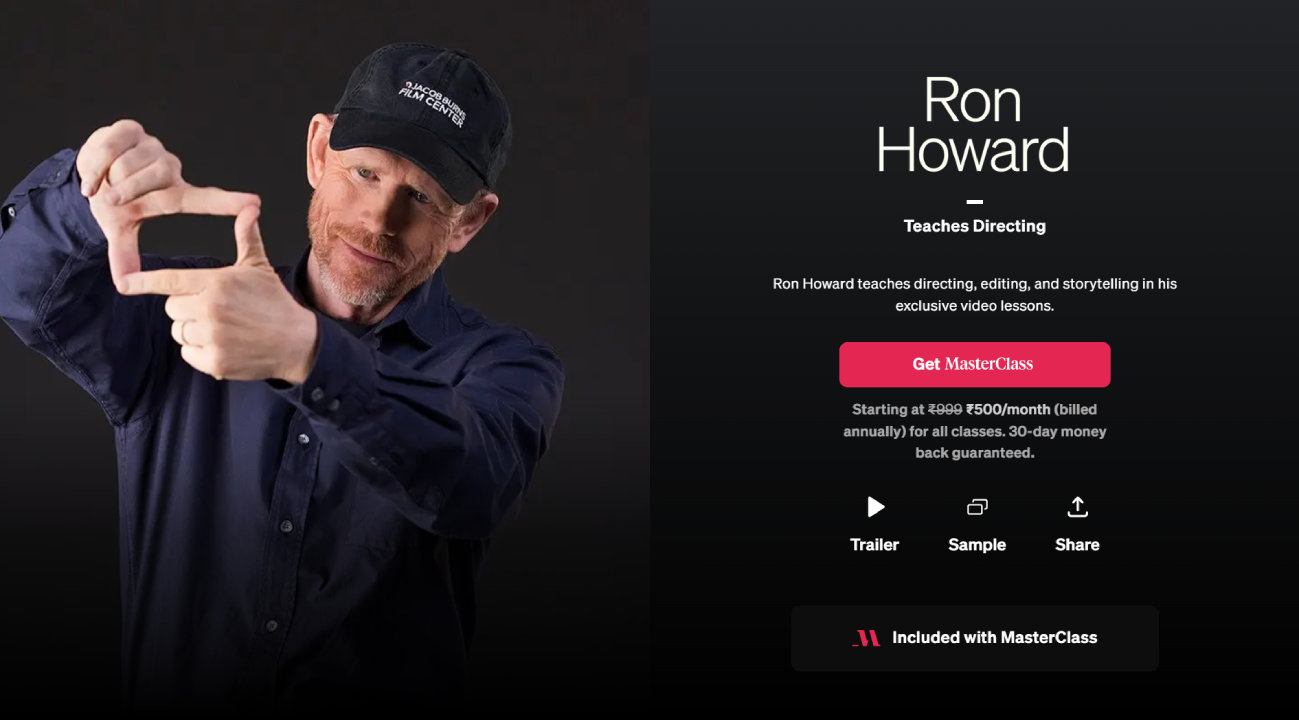
The more useful of the two film classes if you actually intend to direct something. Howard covers script assessment, casting, working with actors, camera choices, sound and the editing room, and he restages a scene from Frost/Nixon to show his process. Calm, methodical, and the broadest coverage of the job of directing on the platform.
Best for: first-time directors and anyone leading a creative team. Skip it if you only want cinematography.
Music
Tom Morello teaches Electric Guitar
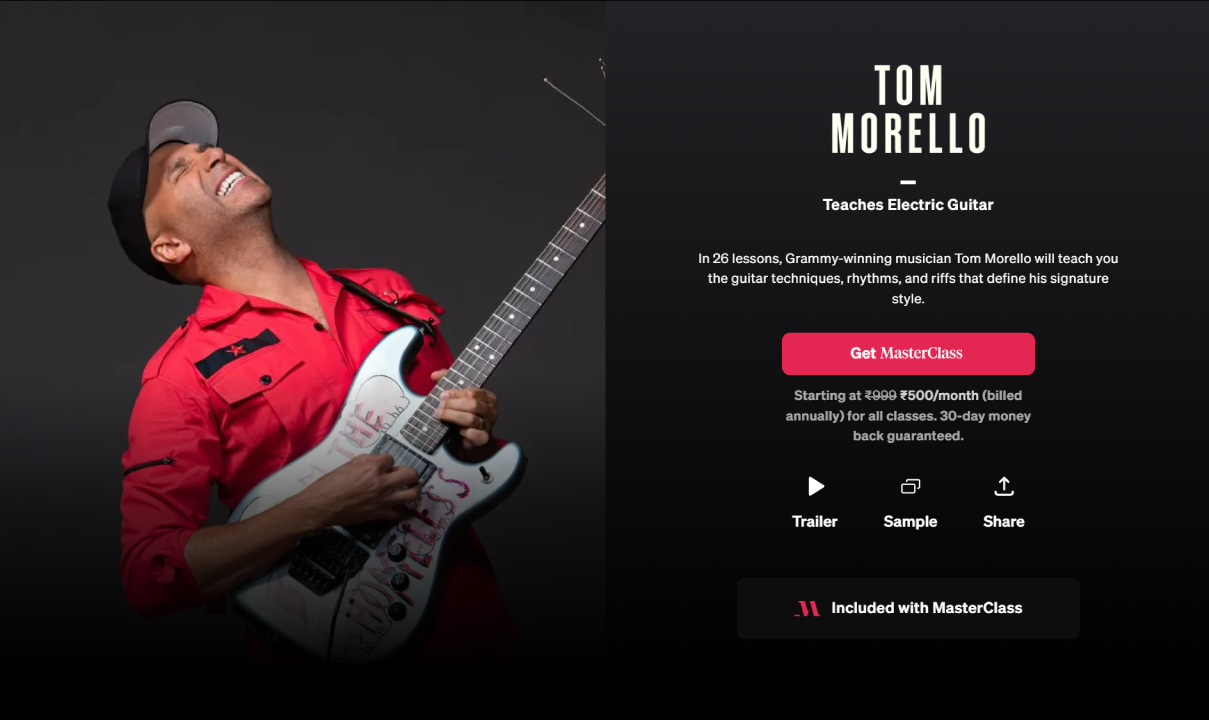
The best-taught class on MasterClass, and it is not close. Morello taught guitar for years before he was famous and structures this like a real course: drills, assignments, practice routines, and a progression from riff-building to soloing to writing a song. Do the assignments and your playing measurably improves. That sentence applies to almost nothing else here.
Best for: anyone who can play a few chords and has stalled. Skip it if you have never held a guitar, because it assumes basic fretting.
Armin van Buuren teaches Dance Music

A long, dense class on producing and performing electronic music, taught largely in Logic Pro. Van Buuren covers sound design with pads and leads, arranging a track from a kick outward, working with vocalists, building a DJ set, and the career side of the industry. It moves fast and assumes you can follow a DAW.
Best for: producers who already have a DAW open. Skip it if you have never made a track, or if you work in Ableton and dislike translating.
Business and persuasion
Chris Voss teaches the Art of Negotiation
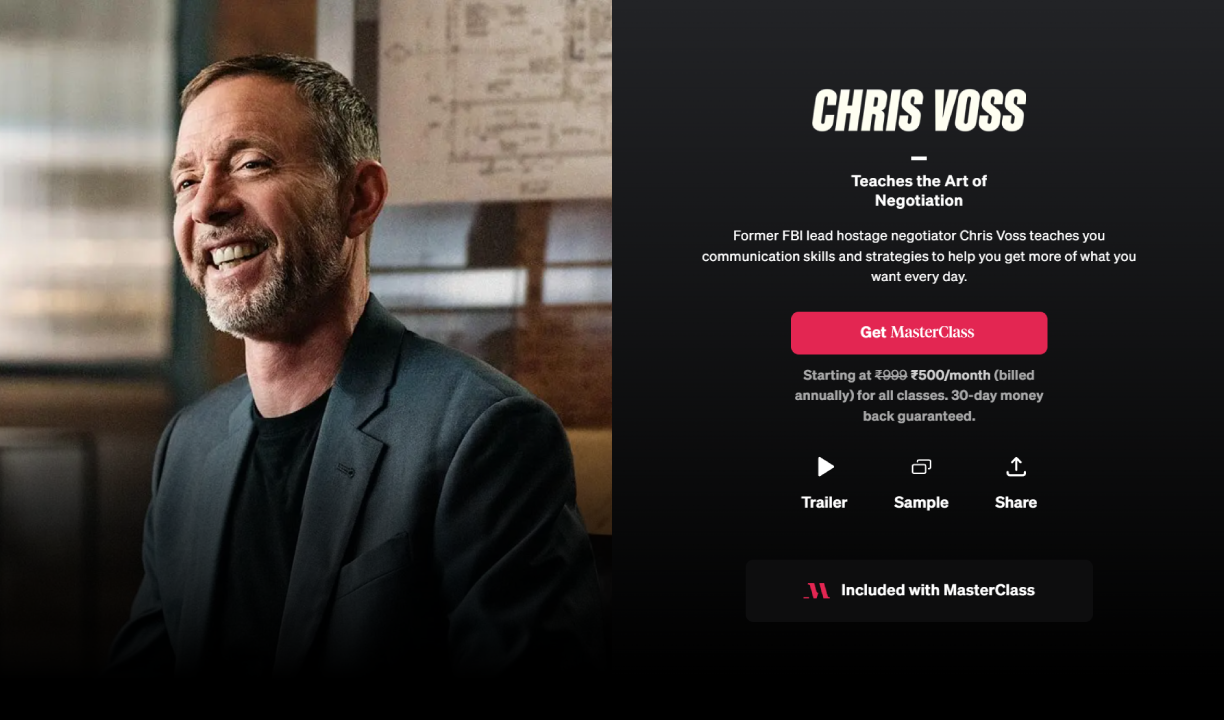
The single most useful class on MasterClass. Voss spent two decades as the FBI’s lead international kidnapping negotiator, and he teaches tactics you can use in a salary conversation the same week: mirroring, labelling, calibrated questions, and the tactical use of silence. The role-play sections are where it earns its reputation. Everything is concrete.
Best for: literally everyone who negotiates anything, which is everyone. Skip it if you have already read Never Split the Difference cover to cover, since the overlap is heavy.
Daniel Pink teaches Sales and Persuasion
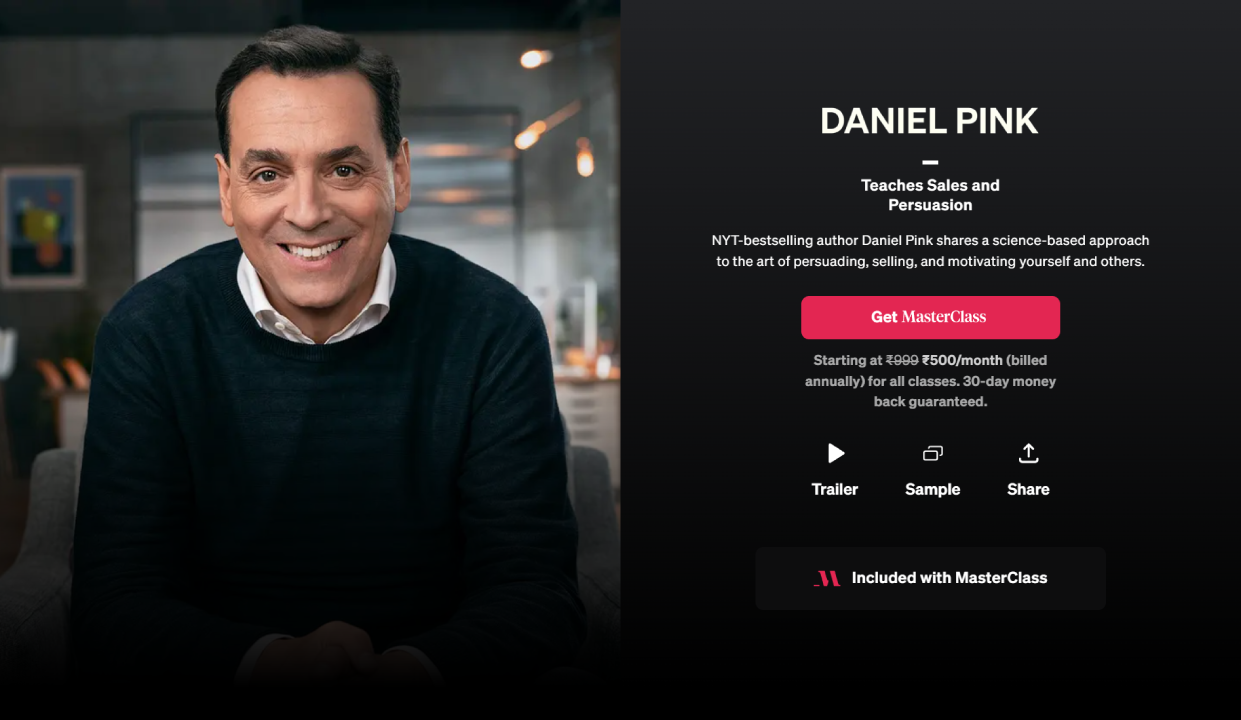
Pink approaches selling as applied behavioural science rather than technique, which suits people who find traditional sales training distasteful. Six pitch formats, nine framing tools, perspective-taking, reading a room, and how to improve commercial decisions. Less dramatic than Voss and a good complement to it.
Best for: founders, freelancers and anyone who hates the word sales. Skip it if you want scripts and objection handling for a call centre.
Sport and games
Stephen Curry teaches Shooting, Ball Handling and Scoring
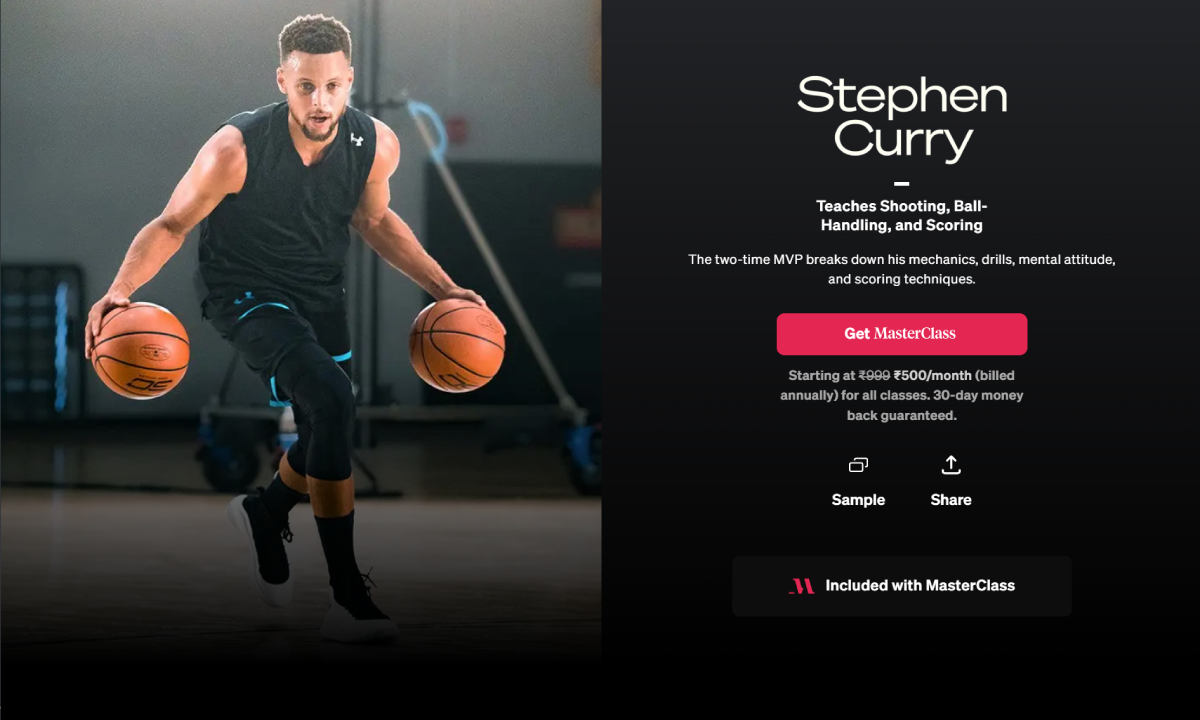
Curry breaks down shooting mechanics, ball handling drills, movement without the ball and the mental side of scoring. The drills are filmed clearly enough to copy in a driveway, and the sections on practice habits apply well beyond basketball. It is a skills class, not a fitness programme.
Best for: players and coaches at high school level or below. Skip it if you want strength and conditioning.
Phil Ivey teaches Poker Strategy
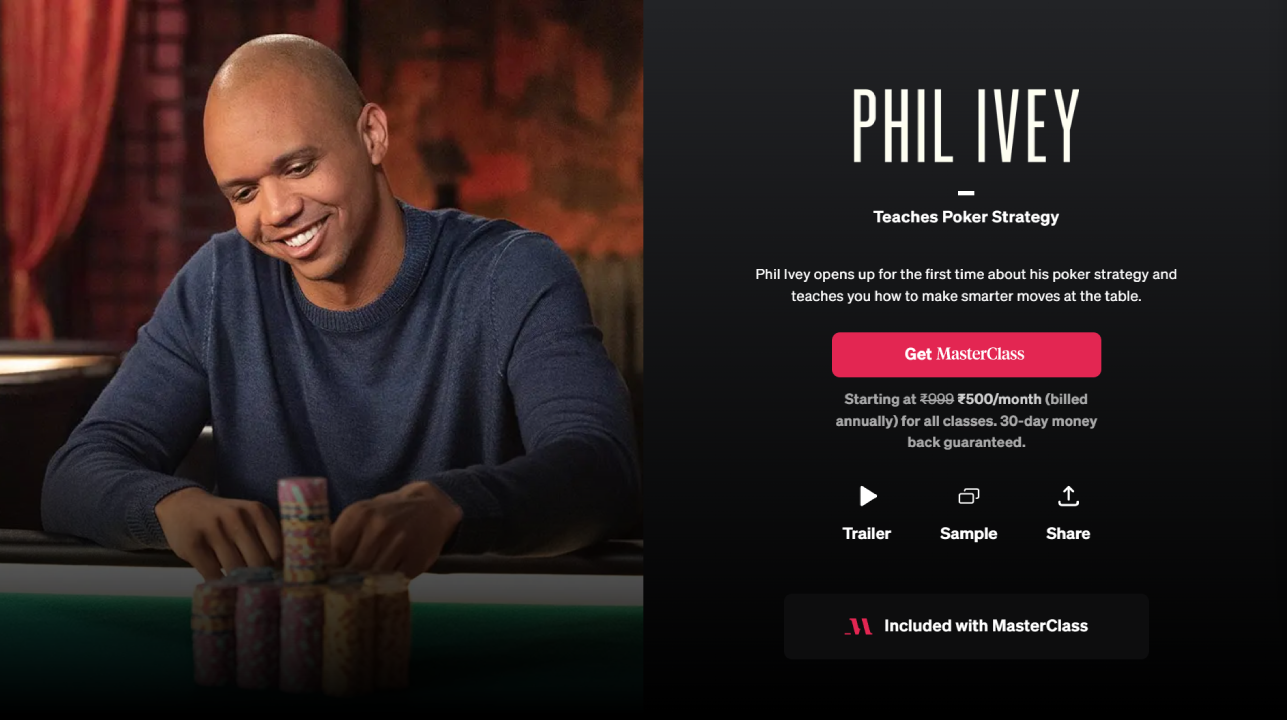
Ivey on hand reading, bet sizing, table image, bankroll discipline and the psychology of playing badly. It is strong on the intuitive read-the-player side and light on the solver-driven maths that dominates modern play. Treat it as one half of an education rather than a complete one.
Best for: recreational players who want to think better at the table. Skip it if you are studying game theory optimal play seriously.
Writing
Salman Rushdie teaches Storytelling and Writing
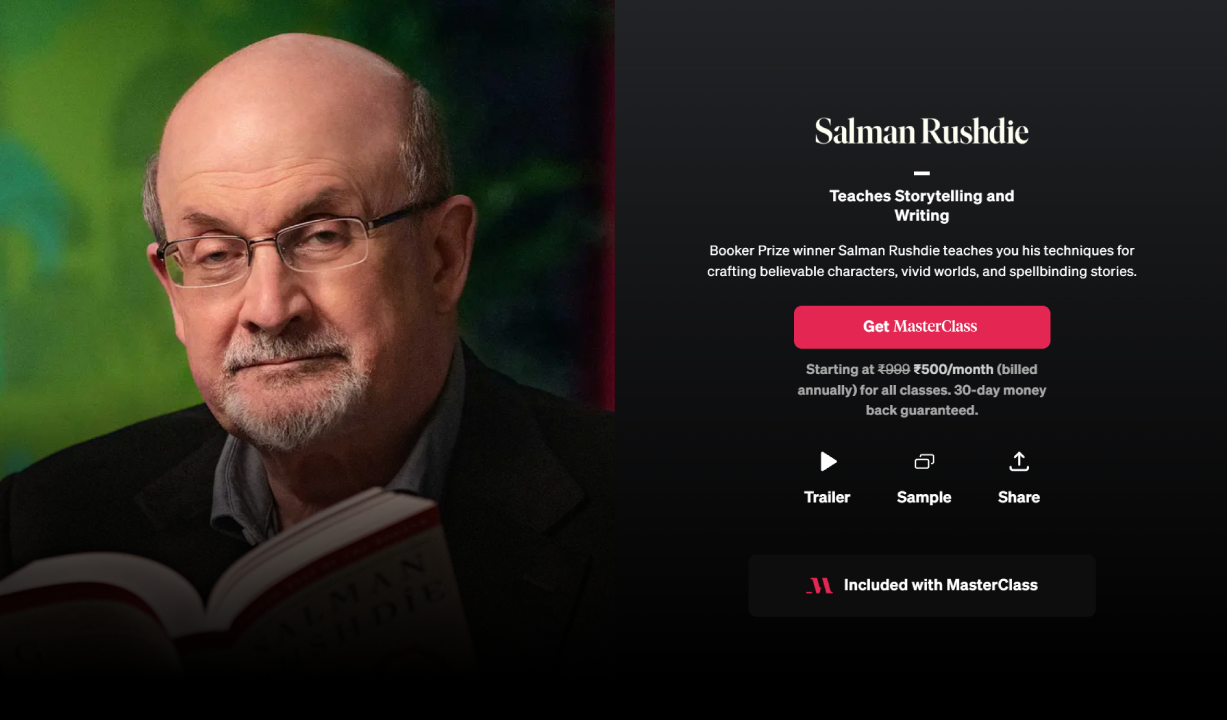
Rushdie on where stories come from, building a world the reader trusts, handling the unreal without losing the reader, and the discipline of revision. It leans literary and philosophical rather than practical, which is either the appeal or the problem depending on why you came.
Best for: literary fiction writers and anyone stuck on what to write about. Skip it if you want structure, plotting beats or publishing advice.
Margaret Atwood teaches Creative Writing
The more practical of the two writing classes. Atwood covers structure, point of view, dialogue, revision and the specific problem of writing speculative fiction that still feels grounded. She is direct about how much of writing is just finishing a bad draft. Pairs well with our guide to the best writing and editing tools for the everyday habits.
Best for: novelists and short story writers who need craft rather than inspiration. Skip it if you write non-fiction or copy.
Science and technology
Chris Hadfield teaches Space Exploration
Hadfield on spacecraft systems, launch, life aboard the ISS, spacewalks and how astronauts train for failure. The section on risk management and staying calm when everything goes wrong is the transferable part, and it is genuinely good. This is a class you take because the subject is fascinating, not because it changes your job.
Best for: anyone with a space obsession, and teams who want a serious model for handling risk. Skip it if you want a career path into aerospace.
Jane Goodall teaches Conservation
Goodall on field research, animal behaviour, the ethics of studying wild populations and how conservation campaigns actually succeed. It is closer to a documentary than a course in structure, but the fieldwork methodology sections have real substance and her arguments about community-led conservation are worth hearing in full.
Best for: students, educators and anyone considering conservation work. Skip it if you want a practical how-to.
Home and lifestyle
Brandon McMillan teaches Dog Training
The most immediately applicable class on the entire platform. McMillan teaches seven common commands with a clear, repeatable method, plus how to fix pulling, jumping and separation anxiety. Follow it properly and you have a better-behaved dog within weeks. If you only ever take one MasterClass and you own a dog, take this one.
Best for: any dog owner, especially with a new puppy or a rescue. Skip it if your dog has serious aggression, which needs an in-person behaviourist.
Ron Finley teaches Gardening
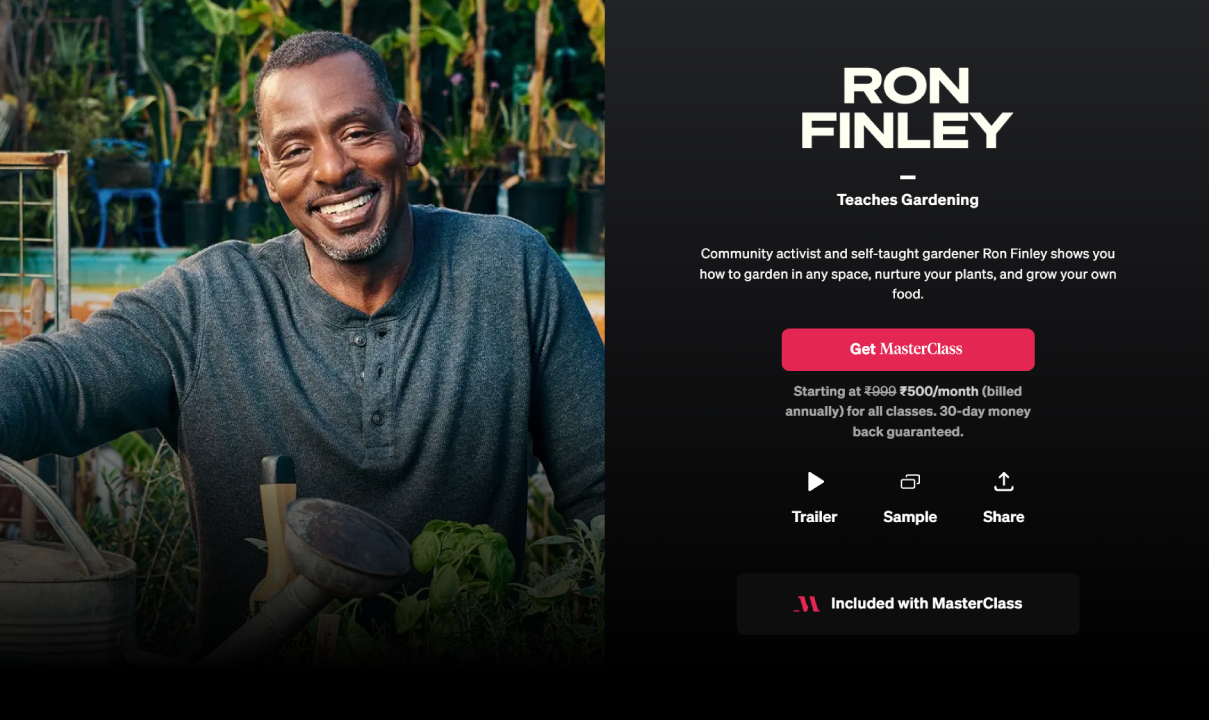
Finley teaches growing food in small urban spaces: soil, composting, containers, what actually grows in a tiny yard, and how to keep it alive. It is short, opinionated and infectious, and the philosophy about food access is a real part of the class rather than a garnish. Practical enough to start the same weekend.
Best for: apartment and small-yard growers who want food, not flowers. Skip it if you have acreage or want ornamental landscaping.
Economics and society
Paul Krugman teaches Economics and Society
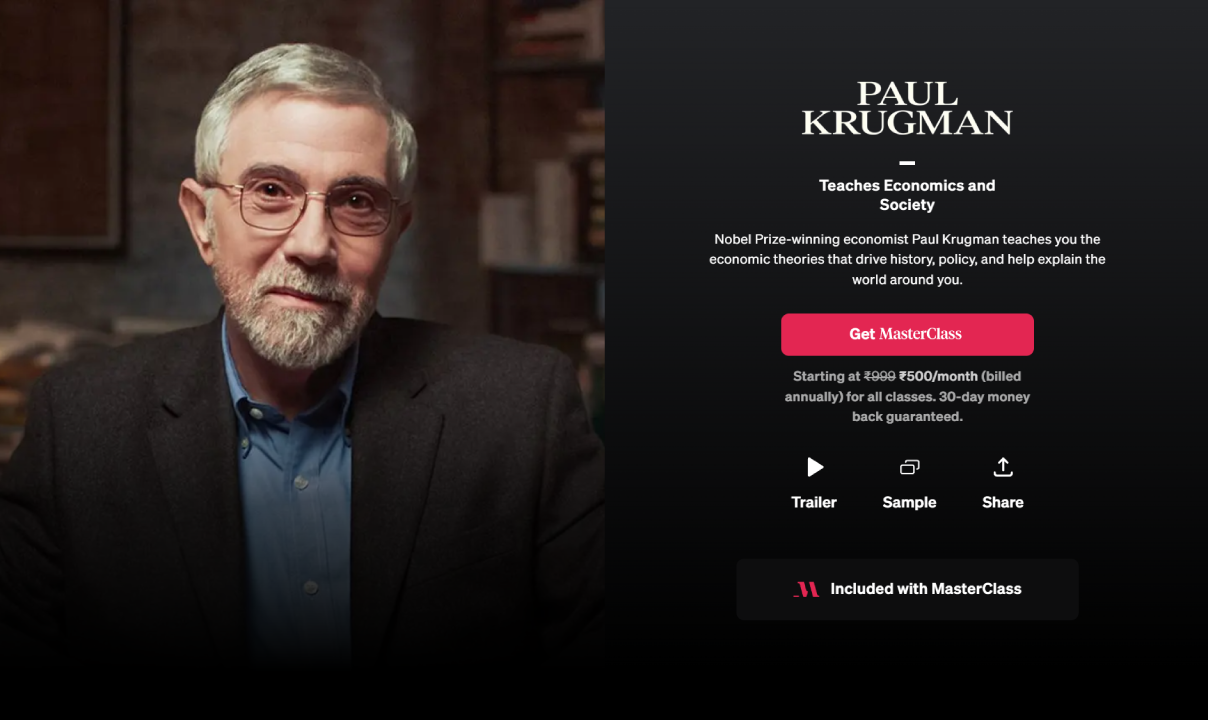
A Nobel laureate explaining trade, inequality, healthcare economics, monetary policy and how to read economic news without being fooled by it. Krugman has clear political positions and does not hide them, so take it as one well-argued perspective rather than a neutral primer. The section on reading data critically is the most useful.
Best for: anyone who wants to follow economic news properly. Skip it if you want a balanced survey of competing schools of economic thought.
Wellness
Jon Kabat-Zinn teaches Mindfulness and Meditation
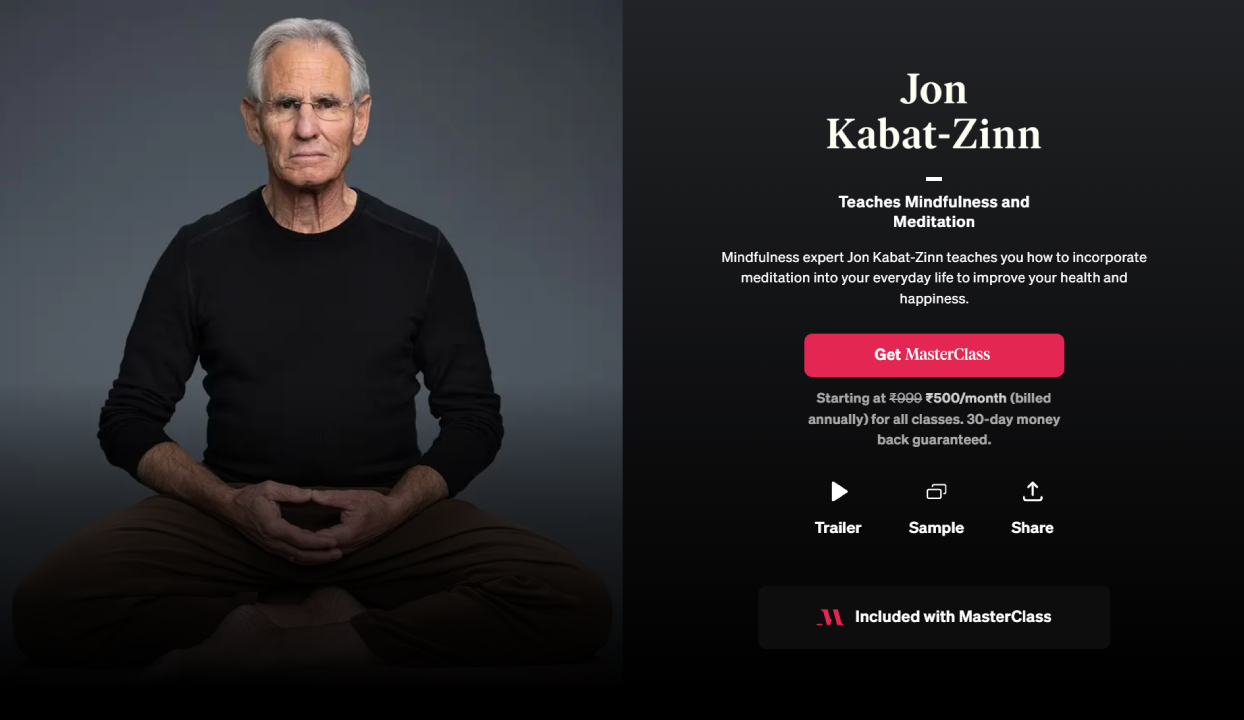
Kabat-Zinn created Mindfulness-Based Stress Reduction, so this is the source rather than an interpretation. Guided practices, body scan, working with pain and difficult emotions, and the reasoning behind each technique. Slower and less polished than a meditation app, and considerably deeper.
Best for: people who have tried an app and want to understand what they are doing. Skip it if you want a five-minute daily habit, where an app is better.
Donna Farhi teaches Yoga Foundations

Farhi teaches breathing, alignment and foundational postures with a level of anatomical care that most yoga video content skips entirely. The emphasis is on not injuring yourself, which sounds unglamorous and is exactly what beginners need. Not a follow-along flow class.
Best for: beginners, and experienced practitioners who suspect their alignment has drifted. Skip it if you want a sweaty daily flow to follow.
Where MasterClass loses
Three mistakes cost people the subscription fee.
- Buying it for a credential. There is no certificate, no accreditation and no assessment. Nothing here goes on a CV. If a career change is the goal, Coursera is the correct spend.
- Treating it like television. The classes with workbooks and assignments are the ones that change anything. Watching all 21 of these without doing the work teaches you nothing you will still know in six months.
- Subscribing for one class. The maths only works if you finish three or four in a year. For a single instructor, wait for a sale or use the 30-day guarantee deliberately.
There’s also no instructor feedback. You never get a response from Ramsay or Atwood, which is the fundamental difference between this and a real course. If you want structured teaching with assessment, look at proper course platforms instead, and if you’re building one, our roundup of WordPress LMS plugins and our LearnDash review are the place to start.
MasterClass vs the alternatives
| Feature |
Best for craft and inspirationMasterClassBest for: Learning a craft from the best in it |
SkillshareBest for: Practical creative skills |
CourseraBest for: Credentials and career change |
|---|---|---|---|
| Annual cost | $120 to $240(winner for this row) | About $168 | $399 for Coursera Plus |
| Certificates you can use | No | No | Yes(winner for this row) |
| University and employer partners | No | No | Yes(winner for this row) |
| Production quality | (winner for this row) | ||
| Hands-on projects and peer feedback | No | Yes(winner for this row) | Yes |
| Instructors who are famous for doing the thing | Yes(winner for this row) | No | No |
| Billing | Annual only | Monthly or annual | Monthly or annual |
| Money-back guarantee | 30 days | Free trial | Refund window on Plus |
We may earn a commission when you buy through links on this page. This does not affect our reviews.
Plain version: Coursera if you need a certificate, Skillshare if you want to build something this weekend, MasterClass if you want to learn how a master thinks. They’re not really competing for the same hour. For coding specifically, none of the three beats a focused route, which we cover in our list of apps for learning to code.
Frequently asked questions
Is MasterClass worth it?
It is if you will genuinely finish three or four classes in a year and do the exercises. At $120 to $240 annually that works out cheaper than a single evening course. It is a poor buy if you want a qualification, want instructor feedback, or subscribed for one specific instructor you will watch in a weekend.
How much does MasterClass cost?
Three annual tiers: Standard at $120, Plus at $180 and Premium at $240 a year, all billed upfront. Every tier unlocks the whole catalogue. The only differences are simultaneous devices, one, two and six, and whether you can download classes for offline viewing. Standard cannot.
Do you get a certificate with MasterClass?
No. There is no certificate, no accreditation and no assessment of any kind. Nothing you complete here is a credential you can put on a CV or a LinkedIn profile. If that is what you need, Coursera and edX issue certificates that employers recognise.
Can you get a refund on MasterClass?
There is a 30-day money-back guarantee from the date of purchase. That is a real window: subscribe, watch the class you actually came for, and decide. Note the subscription auto-renews at the end of the year, so cancel before the renewal date rather than after it.
Is MasterClass better than Skillshare or Udemy?
For learning how an expert thinks about their craft, yes. For finishing a practical project this weekend, no, Skillshare and Udemy are better shaped for that and Skillshare has peer feedback MasterClass lacks entirely. The honest answer is that they solve different problems and plenty of people subscribe to both.
Do you keep access to your MasterClass courses after cancelling?
No. Access ends when the membership ends, including anything you downloaded on Plus or Premium. Downloads are offline viewing while you subscribe, not ownership. If you want a class permanently, MasterClass is not the format for you.
Which MasterClass is best for a complete beginner?
Brandon McMillan on dog training if you have a dog, and Chris Voss on negotiation if you do not. Both assume no prior knowledge, both produce a visible result within weeks, and both are structured as instruction rather than conversation. Avoid starting with Armin van Buuren or Thomas Keller, which both assume real prior skill.
Does MasterClass ever remove classes from the catalogue?
Yes, occasionally, usually when a licensing arrangement ends. It is uncommon and rarely affects the flagship classes, but if you are subscribing specifically for one instructor it is worth confirming the class is still listed before you pay for the year.
The bottom line
The best MasterClass courses are the ones where the instructor is a teacher first and a celebrity second. Chris Voss, Tom Morello and Brandon McMillan all change what you can do. Everything else on the platform ranges from very good to beautifully shot inspiration.
Buy the Plus plan at $180 for the offline downloads, start with the class you would take even if it cost double, and do the assignments. That is the entire difference between people who say MasterClass was worth it and people who say it was not.
Then set the renewal reminder. Really.